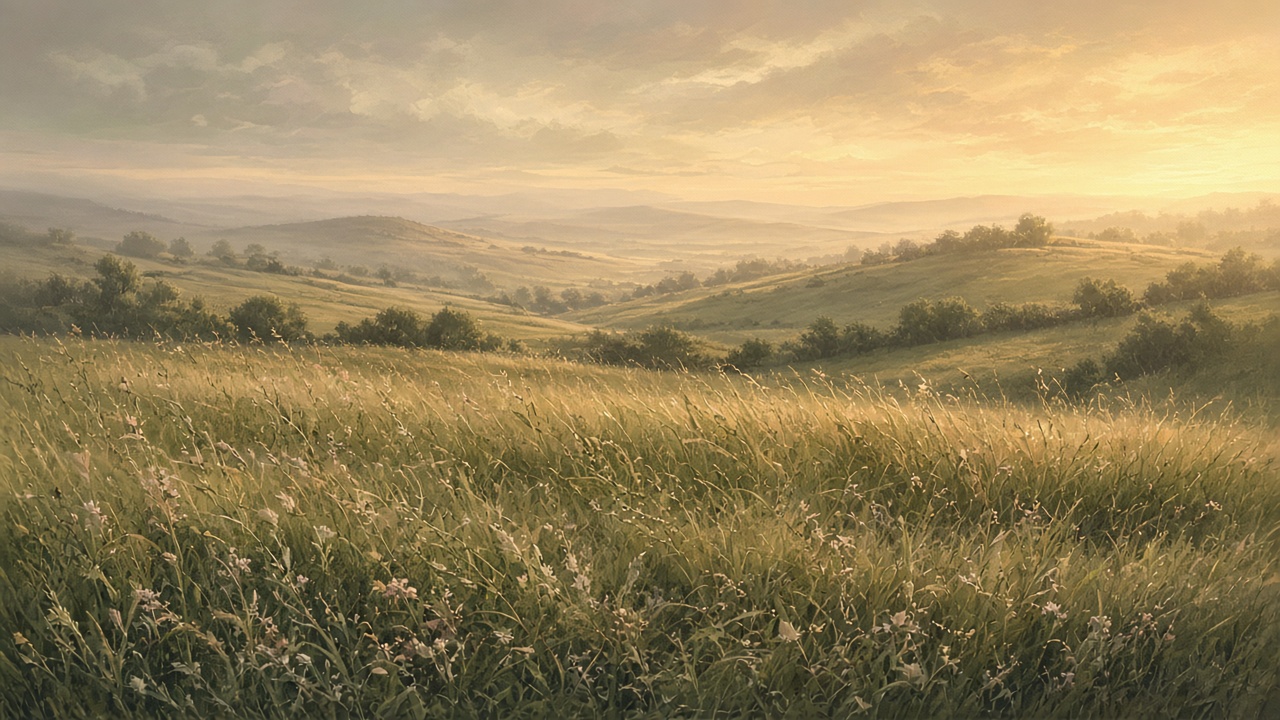
- Two realities: natural grasslands (steppes, great plains, pampas) and semi-natural meadows created by mowing and grazing.
- Dry calcareous turf and arable crops are not covered here.
- Two contrasting climates: continental steppes (IUCN T4.5) receive 250 to 750 mm a year, with cold winters and dry summers; semi-natural meadows in western Europe live under a wetter oceanic climate.
- Ploughing, intensification and the end of grazing threaten these habitats.
Definition and boundaries
This sheet brings together two types that the IUCN keeps apart: natural temperate subhumid grasslands (group T4.5), such as the Eurasian steppes and the North American Great Plains, and semi-natural pastures derived from forest or heath through livestock farming (T7.5). Dry calcareous turf, arable fields and tropical savannas belong to other sheets.
Distribution
Natural grasslands occupy subhumid and semi-arid regions of western Eurasia, north-east Asia, the North American Midwest, Patagonia and the Pampas, as well as south-east Africa, Australia and New Zealand. Semi-natural meadows occur in almost all temperate and tropical climates, notably in western Europe.
Climate
For natural grasslands, the IUCN describes annual rainfall of 250 to 750 mm, cold winters with frequent frost and snow in continental settings, and warm, dry summers that create a strong water deficit. The growing season lasts five to seven months. Semi-natural meadows in western Europe have wetter, oceanic climates.
Soils, relief and water
Soils of steppes and great plains are deep, fertile, rich in organic matter and often fine-textured; they are among the best farmland in the world. Relief is generally flat or rolling. Burrowing mammals mix the soil and help recycle nutrients.
Structuring vegetation
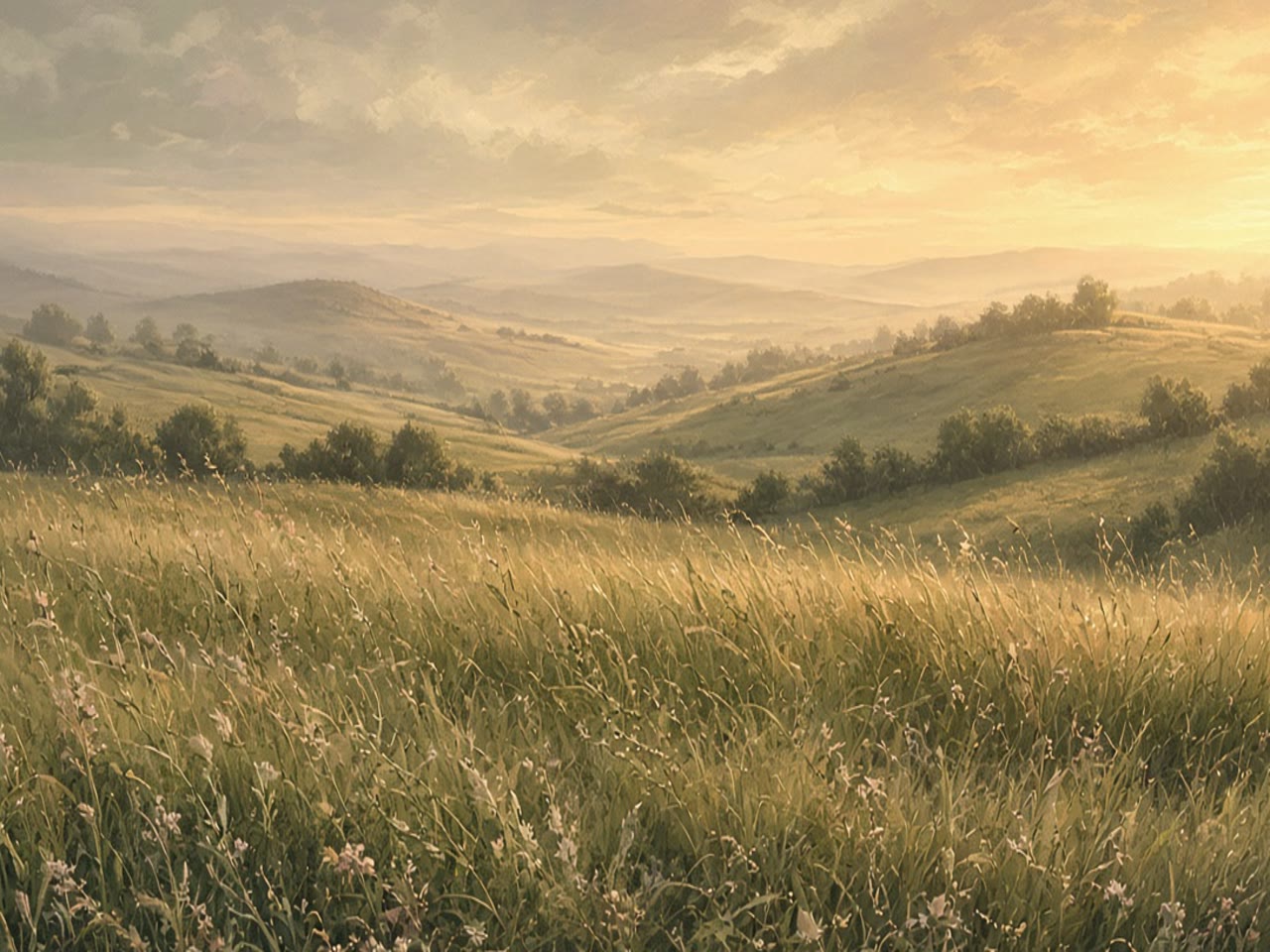
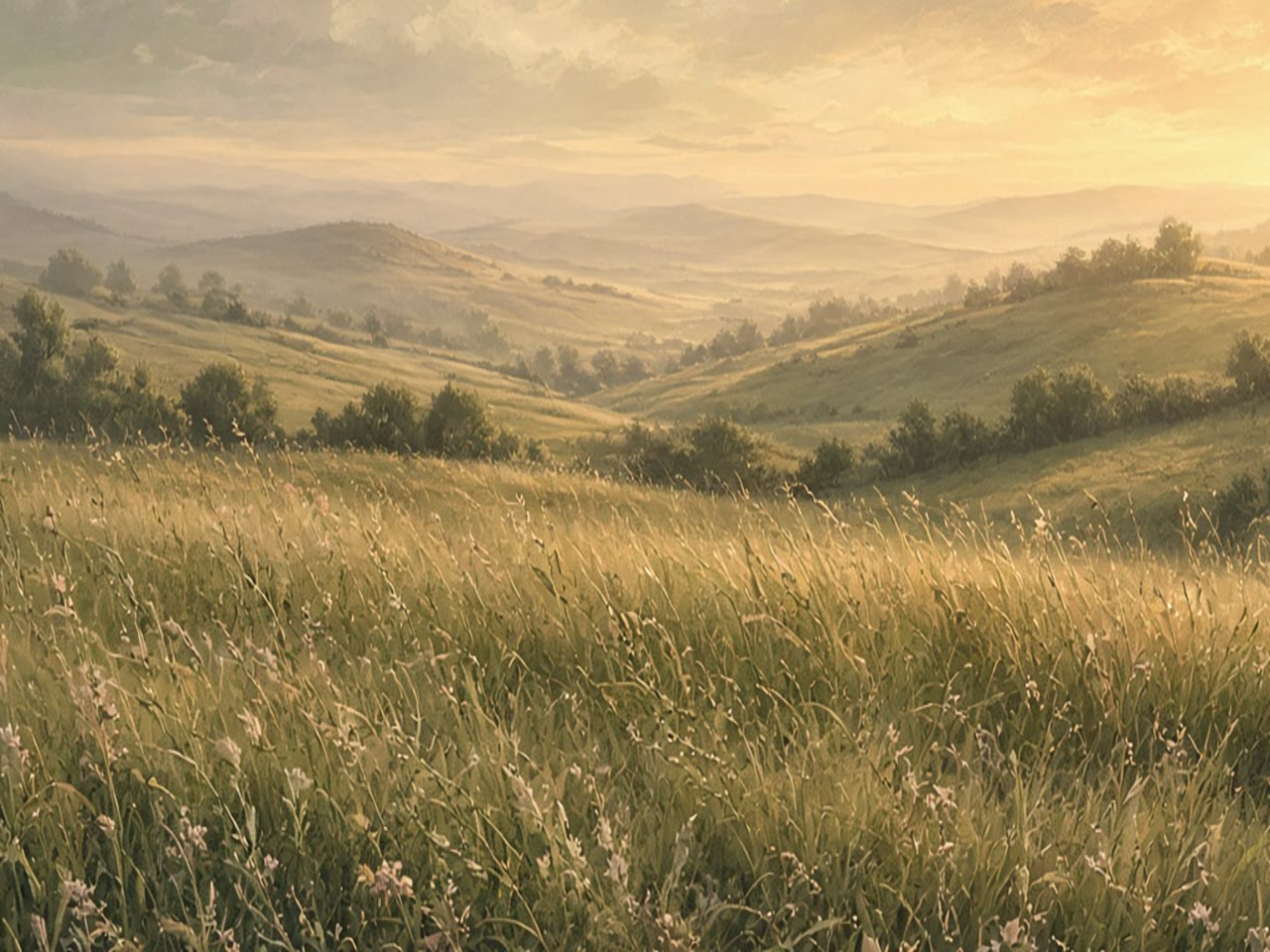
Vegetation consists of tussock grasses with flowering plants growing between them; trees and shrubs are rare or absent. Cool-season and warm-season grasses alternate depending on latitude and moisture. In semi-natural meadows, native grasses, legumes and flowers grow alongside introduced species.
Characteristic fauna
Large herbivores and their predators, burrowing mammals, ground-nesting birds and grasshoppers structure the food web. Prairie dogs and Richardson’s ground squirrel on the Great Plains, the bobak marmot, tarbagan (Mongolian) marmot and eastern (Siberian) roe deer on the Eurasian steppes, and the pampas deer in South America are typical of natural grasslands; elk (wapiti) use North American prairies. The European hare and common vole characterise European meadows, where the red fox and least weasel hunt.
Functioning and dynamics
Grazing and fire interrupt competition between plants and maintain diversity. Without grazing, a thick litter layer builds up: it shelters birds and small mammals but slows production. Semi-natural meadows revert to forest if livestock farming stops, according to the IUCN.
Threats
Soil fertility has led to much of the natural grassland being ploughed. In semi-natural meadows, fertilisation, sowing of forage species and early mowing impoverish the flora and destroy ground nests; conversely, abandonment of grazing leads to scrub encroachment.
Field reading
Grass height and density are everything: short grass for watching and feeding, tall grass for cover and resting. Wind can be read on the surface of the grass. Burrows, earth mounds and runs reveal burrowing fauna. During the nesting season, keeping to tracks limits disturbance.
This sheet describes a habitat. It publishes no season, quota or hunting authorisation: those rules must be checked with the competent authorities of the territory concerned.
Documented gaps
- Dry calcareous turf and mountain meadows would deserve sheets of their own.
- No figures on grassland area lost.
- Grassland birds are not linked to species sheets (the catalogue only contains mammals).
Sources
- IUCN Global Ecosystem Typology — T4.5 Temperate subhumid grasslands (consulted 2026-11-04)
- IUCN Global Ecosystem Typology — T7.5 Derived semi-natural pastures and old fields (consulted 2026-11-04)
Related species
Related techniques
Practice information — not a legal authorisation.
Frequently asked questions
Meadow, turf and steppe: are they the same?
No. A steppe is a natural grassland of dry continental climates; a semi-natural meadow is maintained by mowing or grazing; dry turf is short vegetation on poor, often calcareous soil.
Why have natural grasslands declined?
Their deep, fertile soils make excellent farmland; much of them has been ploughed for cereals.
Is grazing good for a grassland?
Moderate grazing maintains diversity by limiting dominant plants. Too intense, it degrades the sward; absent, it lets scrub invade.
Does this sheet authorise hunting in this habitat?
This sheet describes a habitat. It publishes no season, quota or hunting authorisation: those rules must be checked with the competent authorities of the territory concerned.
Gallery
Keep exploring
Connect this environment to documented species, techniques and other habitats — without confusing ecological description with hunting authorisation.