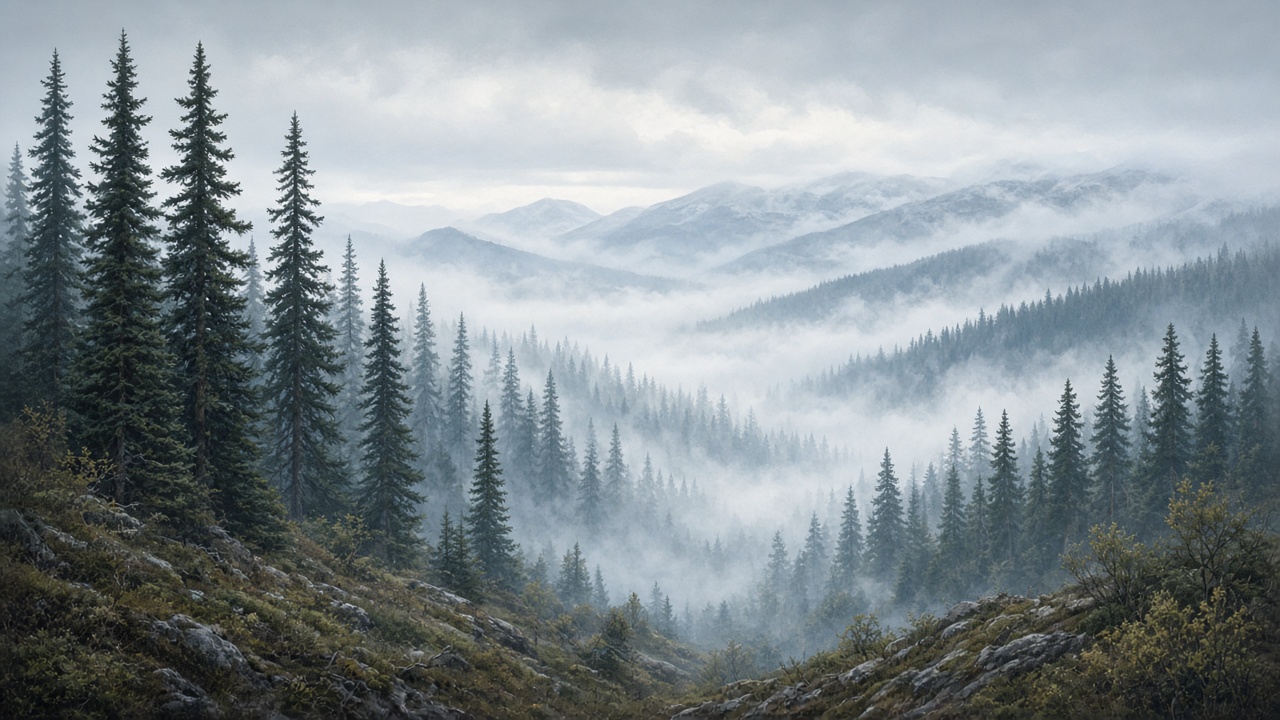
- The boreal forest forms an almost continuous belt between the tundra and temperate forests.
- Only one to three months a year have a mean temperature above 10 °C.
- Spruce, pine, fir, larch and birch dominate on acid soils.
- Natural fires and peatlands are part of how the taiga normally works.
Definition and boundaries
Taiga refers to the conifer forests of high latitudes, placed by the IUCN in group T2.1, which brings together boreal forests and cold montane forests. This sheet covers lowland boreal forest; subalpine forests are described in the Mountains sheet and the associated peatlands in the Peatlands sheet.
Distribution
The boreal forest circles the Northern Hemisphere: Alaska and Canada, Scandinavia, Finland, Russia and Siberia, and northern Mongolia and China. It is bordered to the north by tundra and to the south by temperate forests or steppes. It has no equivalent in the Southern Hemisphere.
Climate
The climate is cold and continental: according to the IUCN, only one to three months exceed a 10 °C mean, and winters are long, dark and snowy. The gap between summer and winter is very large, especially in Siberia. Precipitation is moderate, but low evaporation keeps soils moist.
Soils, relief and water
Soils are acid and poor: needle litter decomposes slowly and forms leached podzols. In the north, permafrost stops water from draining and creates waterlogged soils. Glaciations left a relief of moraines, lakes and hollows filled with peatlands.
Structuring vegetation
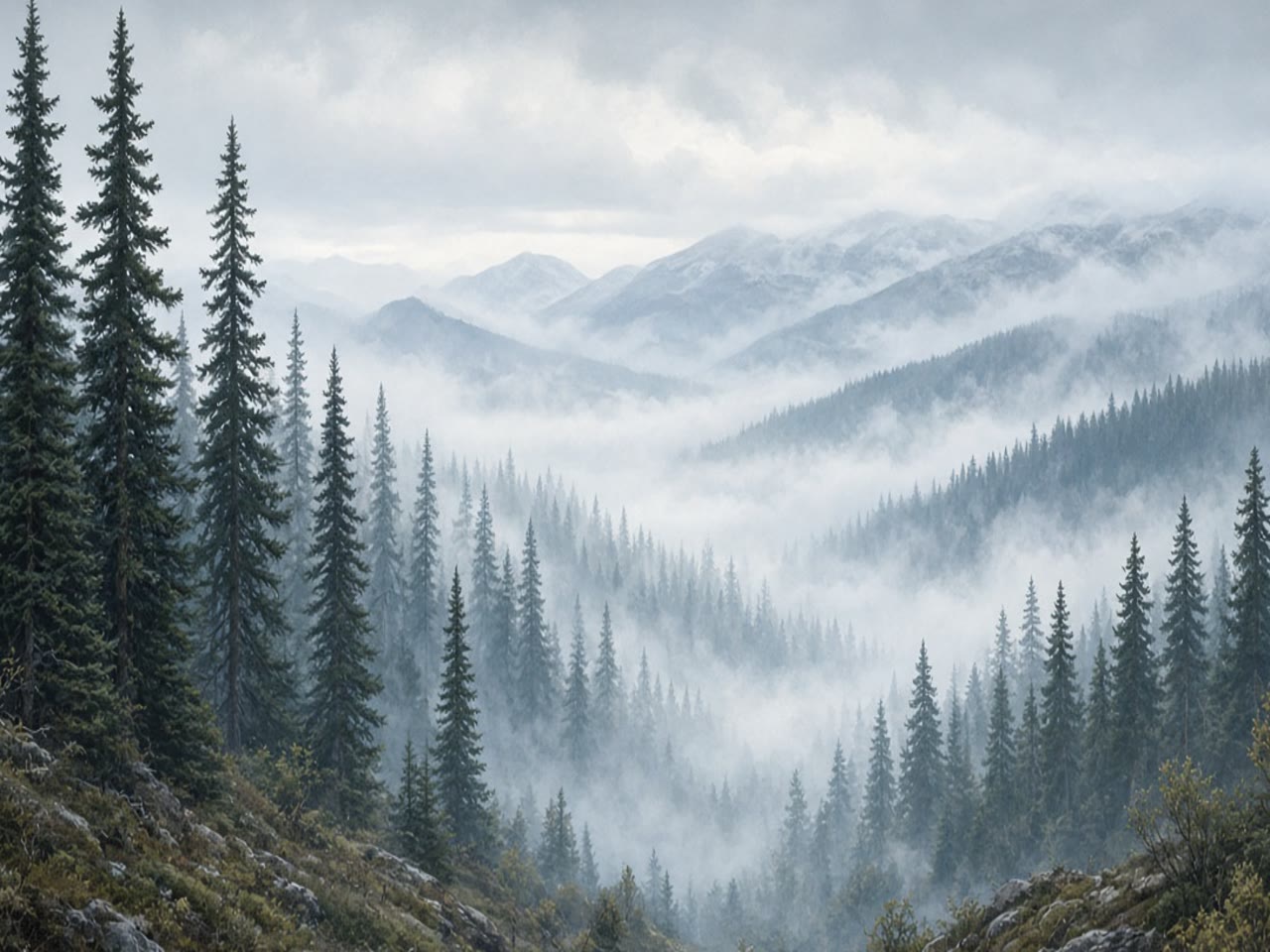
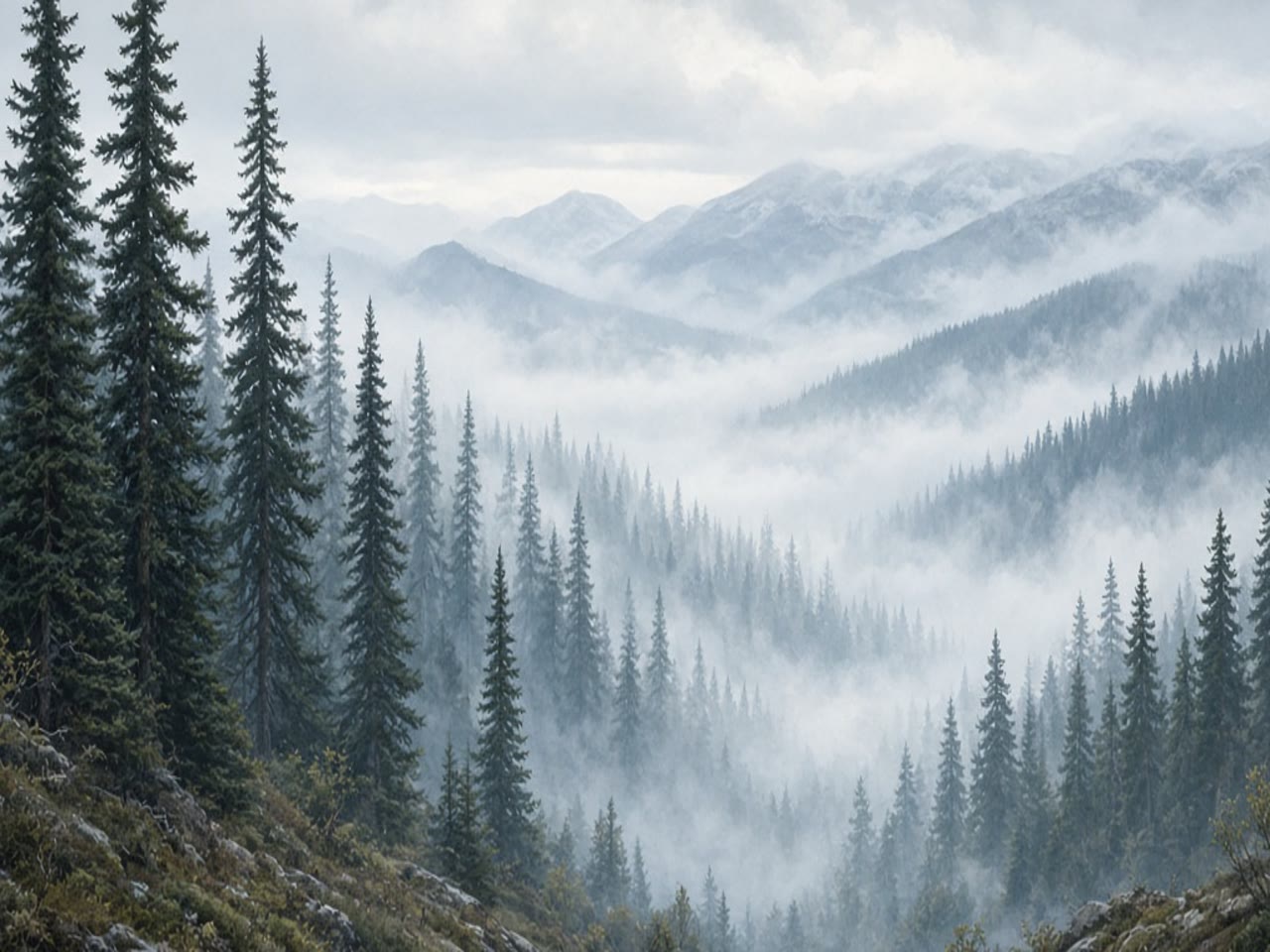
A few tree species dominate vast areas: spruce, Scots pine, fir, larch in eastern Siberia, with birch and aspen after fires. The understorey consists of bilberry, lingonberry, mosses and lichens. Ground lichens are the reindeer’s winter food.
Characteristic fauna
Moose and reindeer (caribou) are the large herbivores, joined by Siberian roe deer and, in the southern taiga, red deer. Wolf, Eurasian lynx, brown bear and wolverine are the main predators, with the black bear in North America. Pine marten, sable and stoat hunt voles; the mountain hare is abundant. The Eurasian red squirrel and, in North America, the American red squirrel depend on conifer seeds. The Eurasian beaver occupies rivers. The capercaillie lives in old pine forests.
Functioning and dynamics
Forest fires, often started by lightning, renew the taiga in large patches: birch and aspen come first, then conifers take over again. Insect outbreaks and windthrow also open the canopy. Vole and hare cycles drive those of their predators.
Threats
Warming is faster at high latitudes: it thaws permafrost, lengthens the fire season and favours pests. Industrial logging, roads, mines and drilling fragment large forests that are still little disturbed. Woodland reindeer are sensitive to these disturbances.
Field reading
Tracks are easy to read in the snow, which covers the ground for much of the year. Bog edges, lake shores and burned areas in regrowth attract moose. Distances are long and landmarks scarce: compass, map and spare food are essential.
This sheet describes a habitat. It publishes no season, quota or hunting authorisation: those rules must be checked with the competent authorities of the territory concerned.
Documented gaps
- Differences between light larch taiga and dark spruce taiga are not detailed.
- No area or deforestation-rate figures.
- Boreal forest birds are not linked to species sheets.
Sources
- IUCN Global Ecosystem Typology — T2.1 Boreal and temperate high montane forests and woodlands (consulted 2026-11-04)
- IUCN Global Ecosystem Typology — TF1.6 Boreal, temperate and montane peat bogs (consulted 2026-11-04)
Related species
Related techniques
Practice information — not a legal authorisation.
Frequently asked questions
Are taiga and boreal forest the same thing?
Essentially yes. The word taiga comes from Russian and is used mostly for Siberia, but it refers to the same great biome of high-latitude conifers.
Are fires a disaster for the taiga?
Not in themselves: they are part of its natural cycle. The problem is their increasing frequency and intensity as the climate warms.
Why so few tree species?
Cold, a short growing season and poor soils suit only a few hardy species, mostly conifers.
Does this sheet authorise hunting in this habitat?
This sheet describes a habitat. It publishes no season, quota or hunting authorisation: those rules must be checked with the competent authorities of the territory concerned.
Gallery
Keep exploring
Connect this environment to documented species, techniques and other habitats — without confusing ecological description with hunting authorisation.