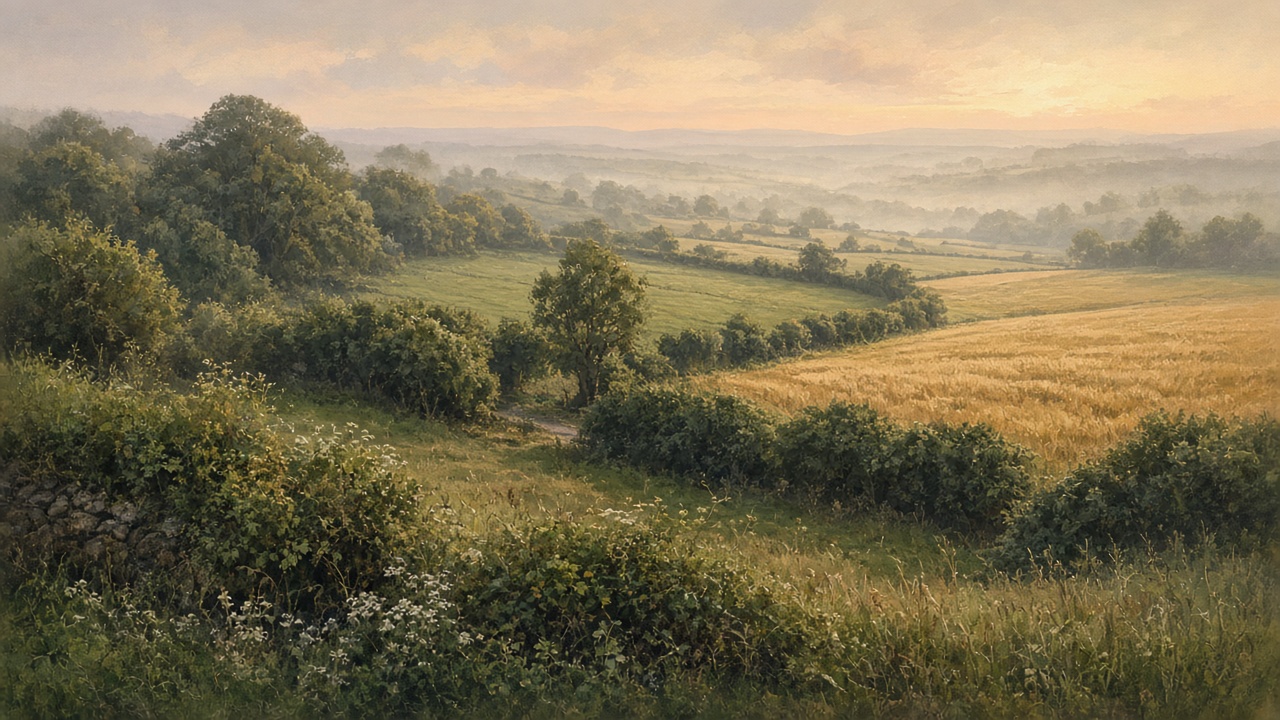
- Ecosystems maintained by ploughing, sowing, fertilising and harvesting, dominated by one or a few annual plants.
- They cover about 11% of the world’s land surface according to the IUCN.
- Wildlife concentrates on margins, grass strips, fallows and stubble.
- Hedgerow landscapes (bocage) have their own sheet.
Definition and boundaries
This sheet covers annual croplands (group T7.1 of the IUCN typology) and the sown temporary leys that alternate with them: cereals, oilseeds, pulses and fodder crops. Permanent grasslands belong to the Grasslands sheet and landscapes of hedge-enclosed fields to the Bocage / hedgerows sheet.
Distribution
Annual crops occupy humid tropical to temperate climate zones and the river flats of dry regions, on every inhabited continent: the great cereal plains of Europe, North America and Ukraine, the rice paddies of Asia and irrigated crops along major rivers.
Climate
Crops need at least one mild to warm season and enough water, supplied by rain or topped up by irrigation. The farming calendar divides the year into phases that are very different for wildlife: bare soil after ploughing, tall cover before harvest and stubble after it.
Soils, relief and water
Crops mostly occupy flat to moderately sloping ground accessible to machinery, on fertile soils. Annual ploughing aerates the soil and releases nutrients but keeps organic carbon relatively low. Drainage and earthworks often change how water flows; some crops replace former wetlands.
Structuring vegetation
Each field is dominated by a single crop species, often a grass (wheat, barley, maize, rice), an oilseed or a legume. Arable weeds, grass strips, banks and fallows provide most of the plant diversity, and therefore the insects and seeds that wildlife depends on.
Characteristic fauna
The IUCN describes an opportunistic fauna (small rodents, starlings) and species coming in from neighbouring habitats. In Europe, the European hare, common vole and field-dwelling roe deer are typical; wild boar, red fox, badger and golden jackal use the margins. Grey partridge, quail, skylark and harriers nest in the crops.
Functioning and dynamics
The habitat is kept in disequilibrium by people: without tillage, weeds and then woody plants take over. Rotations create a mosaic that changes every year. Harvest and ploughing trigger sudden movements of wildlife towards the remaining cover.
Threats
Larger fields, the loss of margins, the use of herbicides and insecticides and fast mechanised harvesting have driven down farmland birds and insects. Simpler rotations reduce the cover available in winter. Crop damage by game also creates local tensions.
Field reading
Read the cropping pattern first: which field offers cover, which has just been harvested. Margins, ditches, grass strips and fallows concentrate movements. Crops flattened by wind or rain offer temporary resting places. Tracks are easy to read on ploughed soil and in the morning dew.
This sheet describes a habitat. It publishes no season, quota or hunting authorisation: those rules must be checked with the competent authorities of the territory concerned.
Documented gaps
- Vineyards, orchards and rice paddies are not described in detail.
- No figures on farmland bird decline by country.
- Farmland birds are not linked to species sheets (the catalogue only contains mammals).
Sources
- IUCN Global Ecosystem Typology — T7.1 Annual croplands (consulted 2026-11-04)
- IUCN Global Ecosystem Typology — T7.5 Derived semi-natural pastures and old fields (consulted 2026-11-04)
Related species
Related techniques
Practice information — not a legal authorisation.
Frequently asked questions
Why do field margins matter so much?
They are often the only places where flowers and weeds grow, where insects live and where wildlife finds permanent cover between harvests.
Is a fallow useful for wildlife?
Yes, especially if it stays in place through the nesting season and winter: it offers food and shelter in an otherwise very open landscape.
How does it differ from bocage?
Bocage is a landscape of fields enclosed by interconnected hedges. Arable plains have few or none; their wildlife depends mostly on grassy margins.
Does this sheet authorise hunting in this habitat?
This sheet describes a habitat. It publishes no season, quota or hunting authorisation: those rules must be checked with the competent authorities of the territory concerned.
Gallery
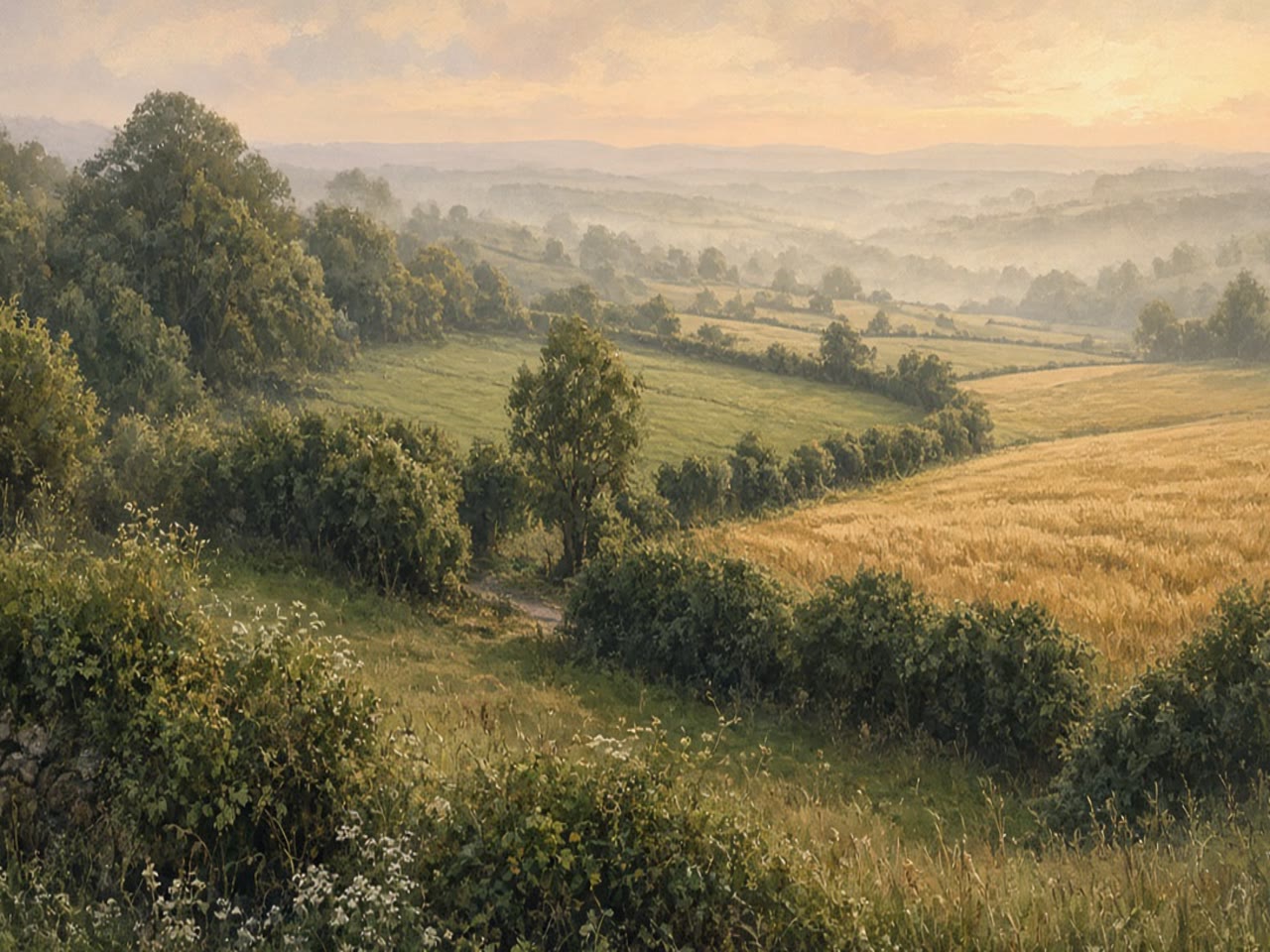
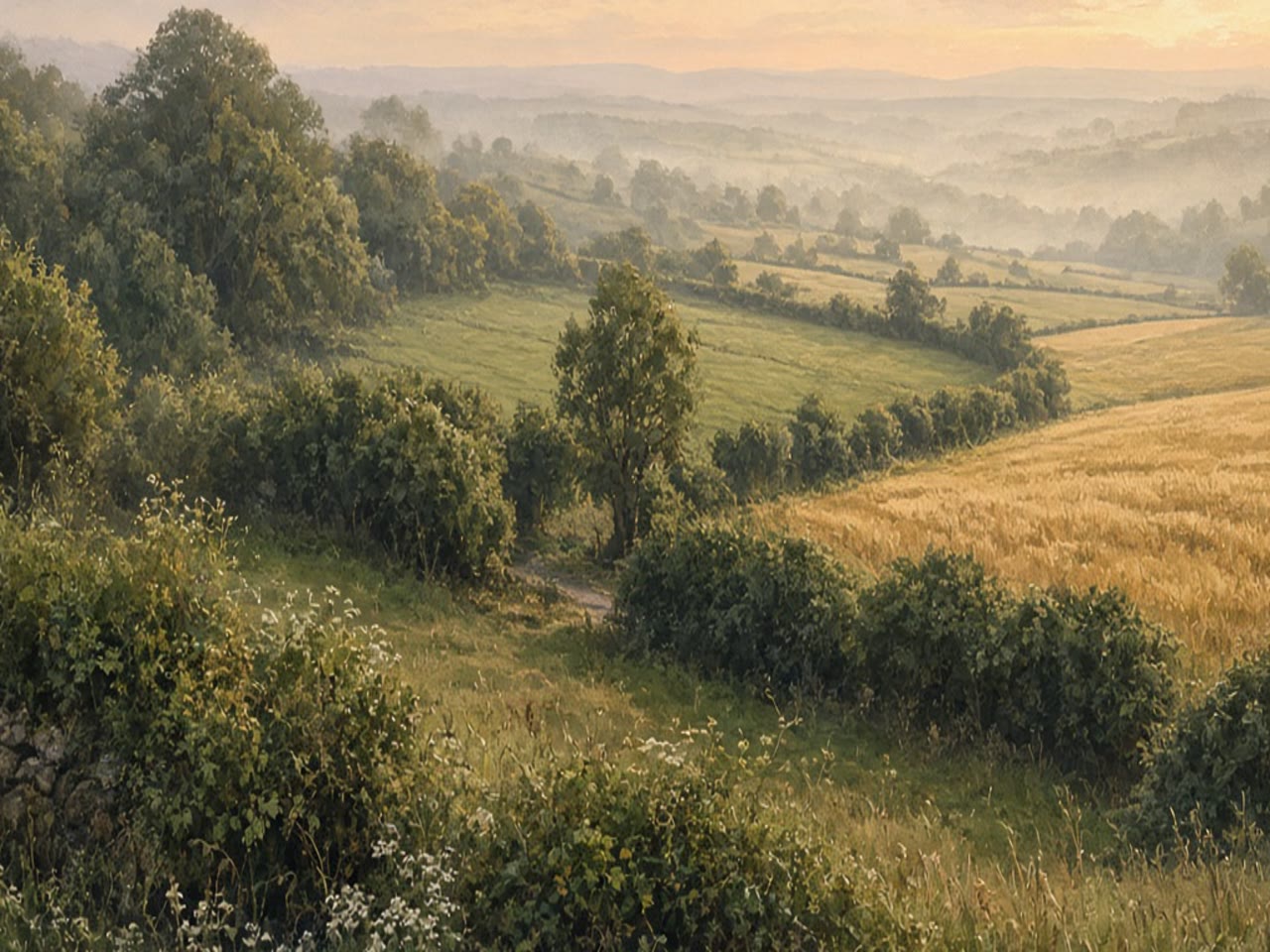
Keep exploring
Connect this environment to documented species, techniques and other habitats — without confusing ecological description with hunting authorisation.