Eurasian Lynx
Lynx lynxEurasian Lynx (Lynx lynx): coexistence sheet across its documented range — presence, biology and prudence, without an invented hunting status.
Seen in: Austria · Bulgaria · Croatia · Czechia · Estonia
Overview
Eurasian Lynx (Lynx lynx) is a coexistence sheet across its documented range: presence, biology and prudence — not a hunting status claim.
Classification: order Carnivora, family Felidae, genus Lynx. Common names: Eurasian Lynx in English, Lynx boréal in French, Lince boreal in Spanish.
Identification
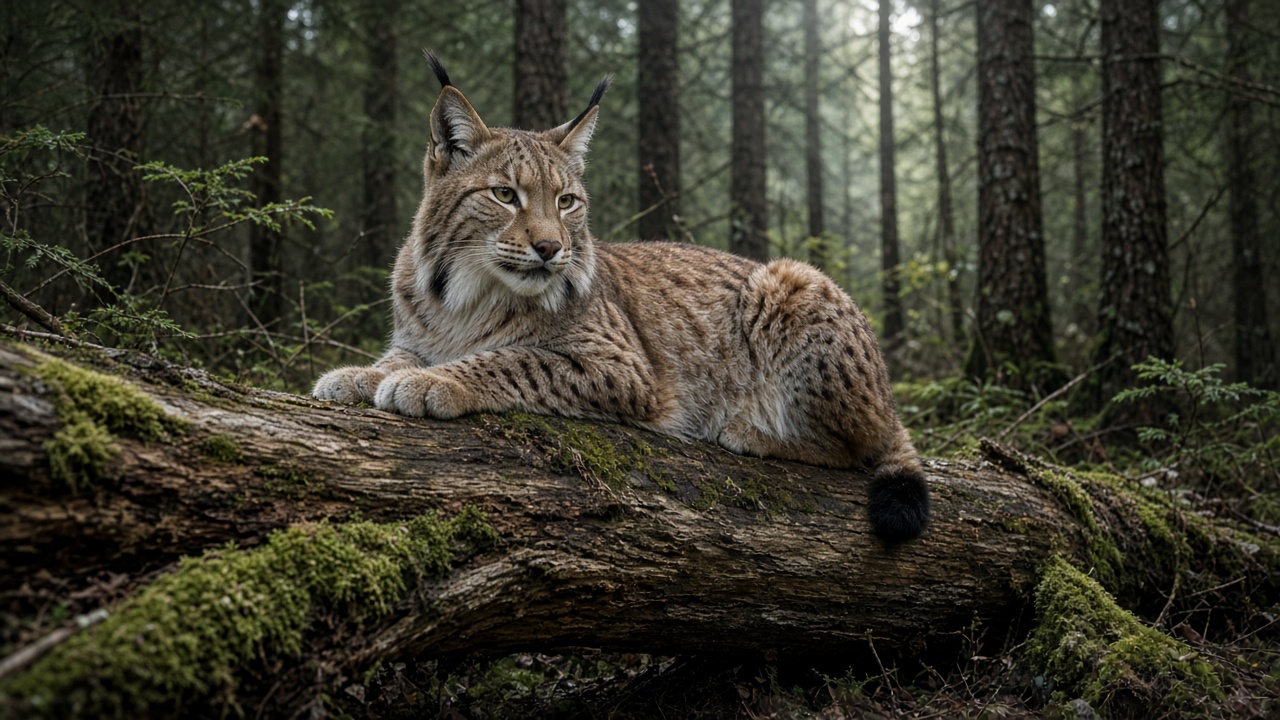
The largest of the four lynx species, the Eurasian lynx is also one of Europe’s largest predators, after the brown bear and the grey wolf. It weighs 18 to 36 kg, measures 70 to 130 cm long and stands 60 to 65 cm at the shoulder; males are larger and more robust. The grey, rusty or yellowish coat may be spotted, striped or plain; the belly, front of the neck, inner limbs and ears are whitish. Black ear tufts, a prominently flared facial ruff and a short tail with a solid black tip are characteristic. Its large, furred paws help it move through deep snow.
A strict carnivore, it hunts mainly small ungulates – roe deer, chamois, musk deer – and sometimes larger prey in winter, when deep snow makes them vulnerable; red foxes, hares, rodents and birds round out its diet. It stalks under cover, pounces and kills with a bite to the neck or by clamping the snout; it eats 1 to 2 kg of meat a day and caches leftovers. Solitary, it mates from February to April. After 67 to 74 days, 2 or 3 kittens, range 1 to 5, weighing 300 to 350 g, are born in May in a hollow log or crevice; they are weaned at 4 months and independent at about 10 months.
Habitats and range
According to ADW, its range extends from western Europe through the Russian boreal forests to the Tibetan Plateau and Central Asia; MDD’s country list includes France, Switzerland, Germany, Poland, Scandinavia, Romania and Russia among others. In Europe and Siberia it lives in forests with dense ungulate populations; in Central Asia, in open, thinly wooded country and rocky hills, and on the northern slopes of the Himalaya. It depends on extensive, connected forest cover and becomes scarcer near settlements, roads and railways.
The countries where the species’ presence is established are shown in the tags on this sheet.
Field signs
It is most active in the early morning and evening and rests the rest of the time under thick brush, in tall grass or in trees; it climbs and swims well. Its low calls are seldom heard. Both sexes mark their ranges with gland secretions and urine. It drags kills into thick cover or under fallen logs to feed in privacy and caches what it does not eat. Home ranges span 25 to 2,800 km², around 100 to 200 km² for a female.
Conservation
For conservation status of Lynx lynx, consult the current IUCN assessment, then cross with French monitoring programmes when they exist (OFB portal and related publications). Never turn a global IUCN category into a departmental hunting rule. GBIF occurrences help situate documented distribution but remain effort-biased.
The IUCN lists it as Least Concern, and it is in CITES Appendix II. ADW names deforestation, loss of prey and illegal trapping for the fur trade as the main threats; hunting for fur brought it close to endangered status in the early 1900s. In the 1960s and 1970s lynx were reintroduced into Germany, France, Austria and Switzerland, successfully in some areas. Roads and railways add to its mortality.
Limits
This sheet on the Eurasian Lynx covers presence and biology. A species being present in a country does not mean it may be hunted, and no season or quota is published here.
Local densities and management plans are not covered here: they are a matter for the managers of each area.
Sources
Sources consulted for this sheet:
- IUCN Red List — species search (consulted 2026-11-01)
- ASM Mammal Diversity Database — Lynx lynx (consulted 2026-11-01)
- GBIF — species search (consulted 2026-11-01)
- Animal Diversity Web — Lynx lynx (Eurasian lynx) (consulted 2026-11-05)
Conclusion
In short: use the scientific name Lynx lynx to cross-check sources, confirm taxonomy and conservation status on the institutional portals listed above, and relate every field sign to the habitat where it was actually found.
Identification
Lynx lynx
Lynx boréal · preferred
Lince boreal · preferred
Eurasian Lynx · preferred
Classification
Class : Mammalia
Order : Carnivora
Family : Felidae
Genus : Lynx
Conservation
IUCN : LC
CITES : —
iucn · LC (global)
Habitat
Frequently asked questions
How do I recognise Eurasian Lynx?
Use Lynx lynx as the scientific anchor. The largest of the four lynx species, the Eurasian lynx is also one of Europe’s largest predators, after the brown bear and the grey wolf. It weighs 18 to 36 kg, measures 70 to 130 cm long and stands 60 to 65 cm at the shoulder; males are larger and more robust. The grey, rusty o...
Where does Eurasian Lynx typically live?
According to ADW, its range extends from western Europe through the Russian boreal forests to the Tibetan Plateau and Central Asia; MDD’s country list includes France, Switzerland, Germany, Poland, Scandinavia, Romania and Russia among others. In Europe and Siberia it lives in forests with dense ungulate populations; in Central Asia, in open, thinly wooded c...
What field signs help confirm Eurasian Lynx?
It is most active in the early morning and evening and rests the rest of the time under thick brush, in tall grass or in trees; it climbs and swims well. Its low calls are seldom heard. Both sexes mark their ranges with gland secretions and urine. It drags kills into thick cover or under fallen logs to feed in privacy and caches what it does not eat. Home ra...