- Family
- Falconry
- Difficulty
- Very high: months of training, daily care for the bird all year round and a good knowledge of the quarry
- Organisation
- One falconer, often with a dog and one or two helpers to flush
- Key gear
- Glove, hood, jesses, bells, lure, telemetry, scales
- Season
- Varies by country and quarry, and may differ from shooting seasons: check with the relevant authority
- Who it suits
- People ready to live with a bird of prey and look after it every day, in or out of the season
What is the idea behind falconry?
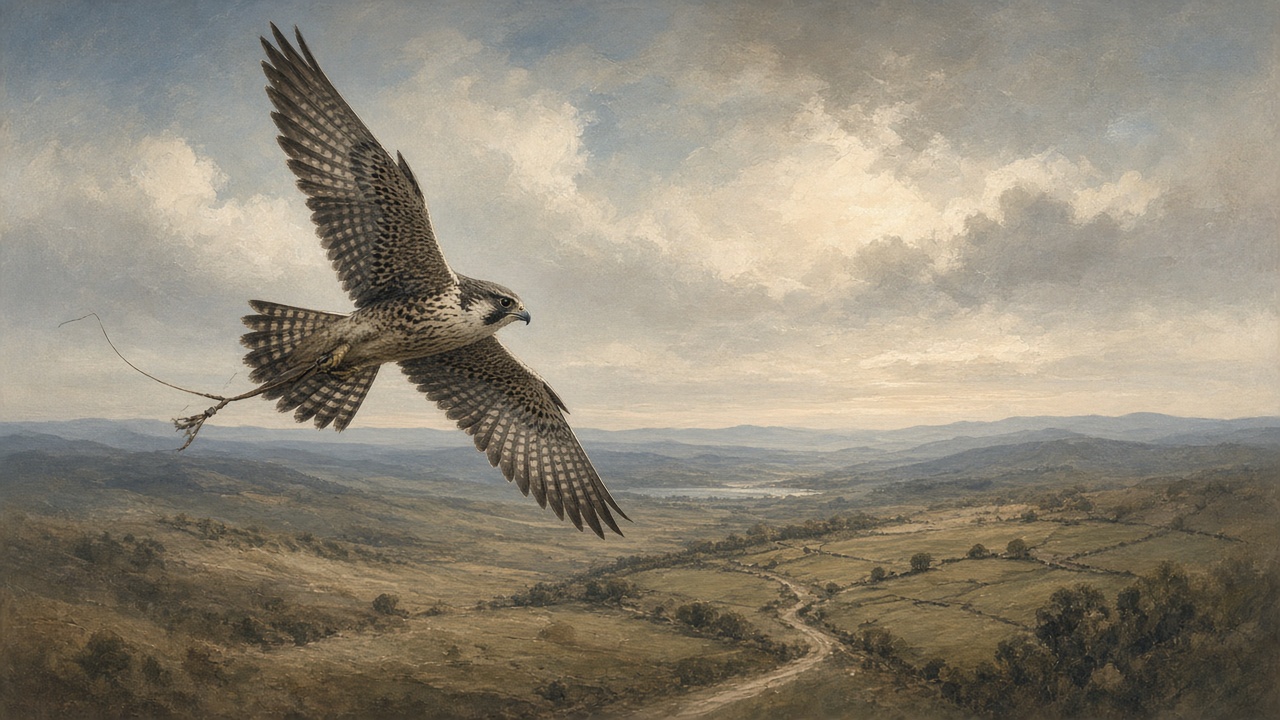
The falconer does not shoot: the bird does the hunting, and the quarry keeps every chance of getting away. The falconer’s job is to get the bird fit, put it in the right place and give it a good slip. A bird in good condition flies because it is keen, not because it is starving: its rations are adjusted to hold it at its flying weight, checked on the scales every day.
There are two broad groups. Longwings, such as the peregrine or a hybrid falcon, are classically flown at partridge or duck: they climb and wait on above the falconer and a dog on point, then stoop onto the flushed bird; they need big open ground with no trees for the quarry to dive into. Shortwings and broadwings, such as the goshawk or the Harris hawk, leave the fist or a tree and chase a rabbit, hare or pheasant low over the ground, in closer country.
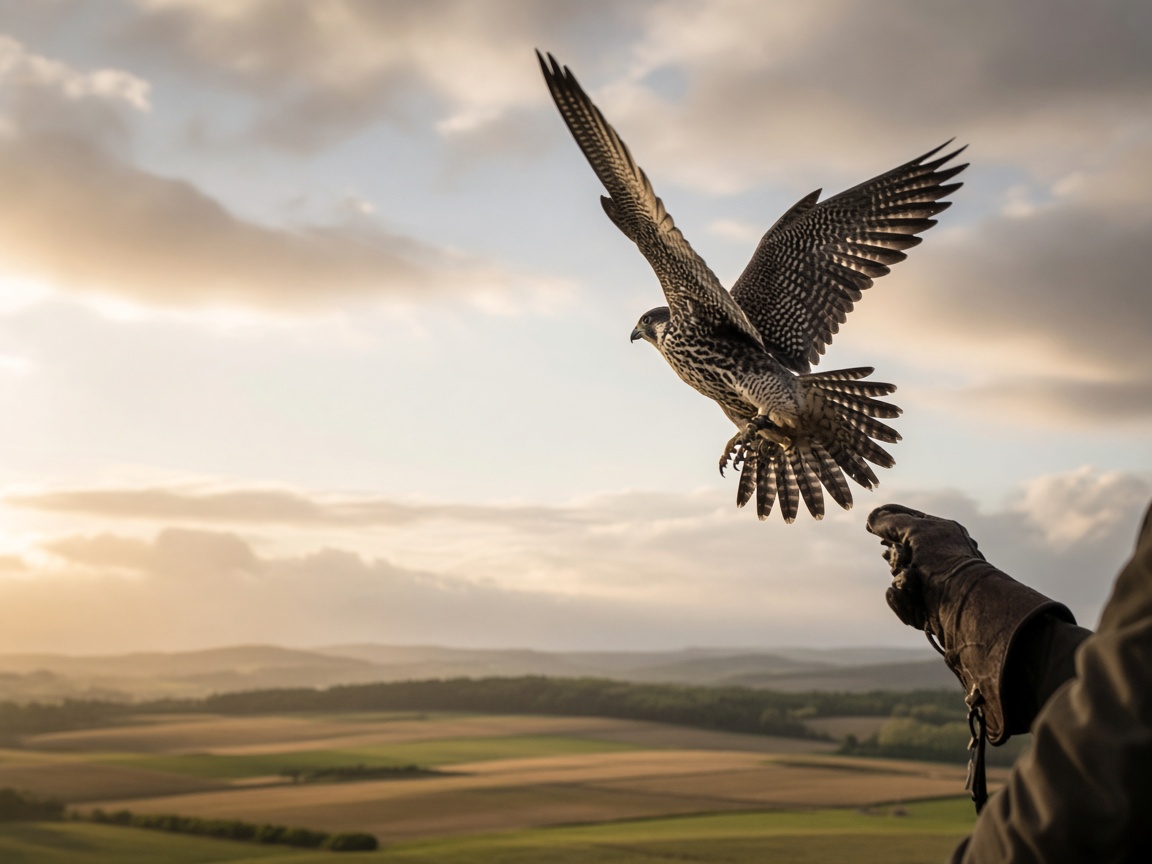
After a kill, the falconer makes in to the bird, trades it off the quarry with a piece of meat and takes it back on the fist. If the bird misses, it is called down to the lure or the fist. Many flights fail, and that is part of the sport. UNESCO lists falconry as intangible cultural heritage shared by many countries. Taking a bird of prey abroad may involve CITES and animal health rules, so check before any trip.
How does falconry work in the field?
What equipment do you need for falconry?
- A hood, jesses and bells, plus a lure for recall
- A telemetry transmitter on the bird and a receiver
- A hawking bag for reward food and quarry taken
- A falconer’s glove and scales to weigh the bird
Safety rules for falconry
- Do not fly a falcon in a strong wind or late in the day, when the risk of losing it is higher
- Keep the dog under control as the bird comes down on its quarry, so that neither is hurt
- Handle the bird with the glove: talons and beak can injure, even on a calm bird
- Check power lines, roads and fences around the flying ground
Common mistakes in falconry
- Flying a falcon on ground that is too small or too wooded, where quarry quickly reaches cover
- Being slow to make in, so that the bird tries to carry its kill away
- Entering a young bird at difficult quarry before it has gained confidence
- Flying a bird whose weight or condition is wrong for the day
Which species are hunted by falconry?
Where is falconry practised?
England
In England, falconry is practised on both ground game and birds. The Hunting Act 2004 exempts flushing a wild mammal from cover to enable a bird of prey to hunt it, on land the hunter owns or has the occupier’s permission to use (Schedule 1, paragraph 6). Natural England’s general licence GL42 also lists targeted falconry among the methods for controlling certain bird species.
France
In France, falconry (chasse au vol) is a hunting method in its own right and requires a hunting licence. Keeping birds of prey is regulated, and the falconry season may differ from the shooting season. It is practised on open farmland for partridge, pheasant, rabbit and hare, and on corvids. The OFB and the departmental hunting federation explain local rules.
Germany
Falconry, Beizjagd, is recognised in federal law: the falconer must carry a Falknerjagdschein (falconer’s hunting licence), issued after the hunting exam and a separate falconry exam, with details left to the federal states. Keeping birds of prey is also governed by the federal game protection ordinance.
Scotland
In Scotland, the 2023 Act allows no more than two dogs, under control and with the landowner’s permission, to search for or flush a wild mammal for a bird of prey, and the quarry must be killed by the bird or shot as soon as reasonably possible (section 6). The Scottish version of the Wildlife and Countryside Act 1981 makes separate provision for game birds, including red grouse, taken by means of a bird of prey (section 2(1C) and (1D)).
Spain — Castilla y León
In Spain, falconry (cetrería) is regulated by the autonomous communities, which set the conditions for keeping raptors and flying them at quarry. It is an old and living tradition, notably red-legged partridge with falcons and rabbit with goshawks or Harris hawks. The RFEC provides information on hunting methods and points to the regional federations.
Rules vary by country and region: check with the local authority. See the sources
Falconry compared with neighbouring techniques
Falconry shares the dog’s quartering and point with shooting over pointing dogs, but a falcon takes the flushed bird instead of a gun. Like walked-up shooting, it means walking the ground to flush quarry, at a slower pace and one flight at a time. It also combines with ferreting: rabbits bolting from the warren are taken by a goshawk or Harris hawk instead of purse nets or guns.
Key terms in falconry
- falconry
- Hunting wild quarry with a trained bird of prey.
- longwings
- Falcons that climb high and stoop onto a flushed bird.
- shortwings and broadwings
- Goshawks, sparrowhawks and buzzards or Harris hawks flown from the fist or a perch close to the ground.
- lure
- In falconry, a weighted object with food tied on, swung to call the bird back.
- jesses
- Leather straps on the bird’s legs by which it is held.
- hood
- A leather cap covering the bird’s eyes to keep it calm in transit.
- pointing dog
- A dog that quarters ahead of the hunter and freezes when it scents a bird, to show where it is.
- flying weight
- The weight at which a particular hawk or falcon flies keenly and returns reliably, tracked by weighing it every day.
- telemetry
- A small transmitter fitted to the bird and a receiver used to find it if it flies out of sight.
Frequently asked questions about falconry
What is falconry?
It is hunting wild quarry with a trained bird of prey: a falcon, goshawk, sparrowhawk, Harris hawk or eagle. The bird chases and takes the quarry itself; the falconer gets it fit, puts it in position and recovers it.
What is the difference between longwings and shortwings?
Longwings are falcons that climb high and stoop on a flushed bird in open country. Shortwings such as goshawks and sparrowhawks, and broadwings such as Harris hawks, leave the fist and hunt close to the ground, even in closer cover.
Which bird do beginners usually start with?
Many falconers start with a Harris hawk, known for being tolerant and sociable. The choice depends mostly on the quarry, the ground available and advice from an experienced falconer.
Do you need a dog for falconry?
Not always. A pointing dog is very useful for partridge hawking, as it finds the bird before the falcon goes up. With shortwings and broadwings, a dog or helpers flush the rabbit or pheasant.
What if the bird does not come back?
Call it to the lure, then search with telemetry. A lost bird often stays in the area and comes down to the lure when hungry; telling neighbours helps to find it.
Is falconry recognised by UNESCO?
Yes. UNESCO has inscribed falconry on its Representative List of the Intangible Cultural Heritage of Humanity, as living heritage shared by many countries, including France and Spain.
Falconry in pictures
Sources and references on falconry
- Office français de la biodiversité (OFB) — Chasse, permis de chasser et police de l’environnement (consulted on )
- Légifrance — Code de l’environnement, livre IV, titre II : chasse
- Fédération nationale des chasseurs (FNC) — Chasseur de France : pratiques, sécurité et fédérations départementales (consulted on )
- Boletín Oficial del Estado (BOE) — Legislación estatal y autonómica de caza (consulted on )
- Real Federación Española de Caza (RFEC) — Modalidades, licencias y federaciones autonómicas (consulted on )
- Natural England (GOV.UK) — Wildlife licences and protected species in England (consulted on )
- legislation.gov.uk — Hunting Act 2004 (England and Wales) (consulted on )
- British Association for Shooting and Conservation (BASC) — Shooting advice and codes of practice (consulted on )
- UNESCO — Falconry, a living human heritage (consulted on )
- CITES — Convention on International Trade in Endangered Species
- Bundesministerium der Justiz (gesetze-im-internet.de) — Bundesjagdgesetz (BJagdG), § 15 Allgemeines (Jagdschein, Falknerjagdschein, Jäger- und Falknerprüfung) (consulted on )
- Boletín Oficial del Estado (BOE) — Ley 4/2021, de 1 de julio, de Caza y de Gestión Sostenible de los Recursos Cinegéticos de Castilla y León (texto consolidado) : arts. 32-40, 50-51 y anexo III (modalidades) (consulted on )
- Légifrance — Code de l'environnement, article L424-4 : modes de chasse (à tir, à courre, à cor et à cri, au vol) et chasse du gibier d'eau à la passée (consulted on )
- legislation.gov.uk — Hunting Act 2004, Schedule 1 : Exempt hunting (paras 1 à 9) (consulted on )
- legislation.gov.uk — Hunting with Dogs (Scotland) Act 2023, section 6 : exception, fauconnerie, tir du gibier et deer stalking (consulted on )
Practice information — not a legal authorisation.