- Family
- Wetland shooting
- Difficulty
- Moderate to high: you need to understand tides or water levels, recognise species in flight and cope with the cold
- Organisation
- Alone, in pairs or in a small group, almost always with a dog
- Key gear
- Waders, a lifejacket, cartridges suited to wetlands, binoculars
- Season
- Varies by species, country and type of ground: check with the hunting federation or the relevant authority
- Who it suits
- Confident shots at flying birds who are happy to start early and sit out in the cold
What is the idea behind waterfowl hunting?
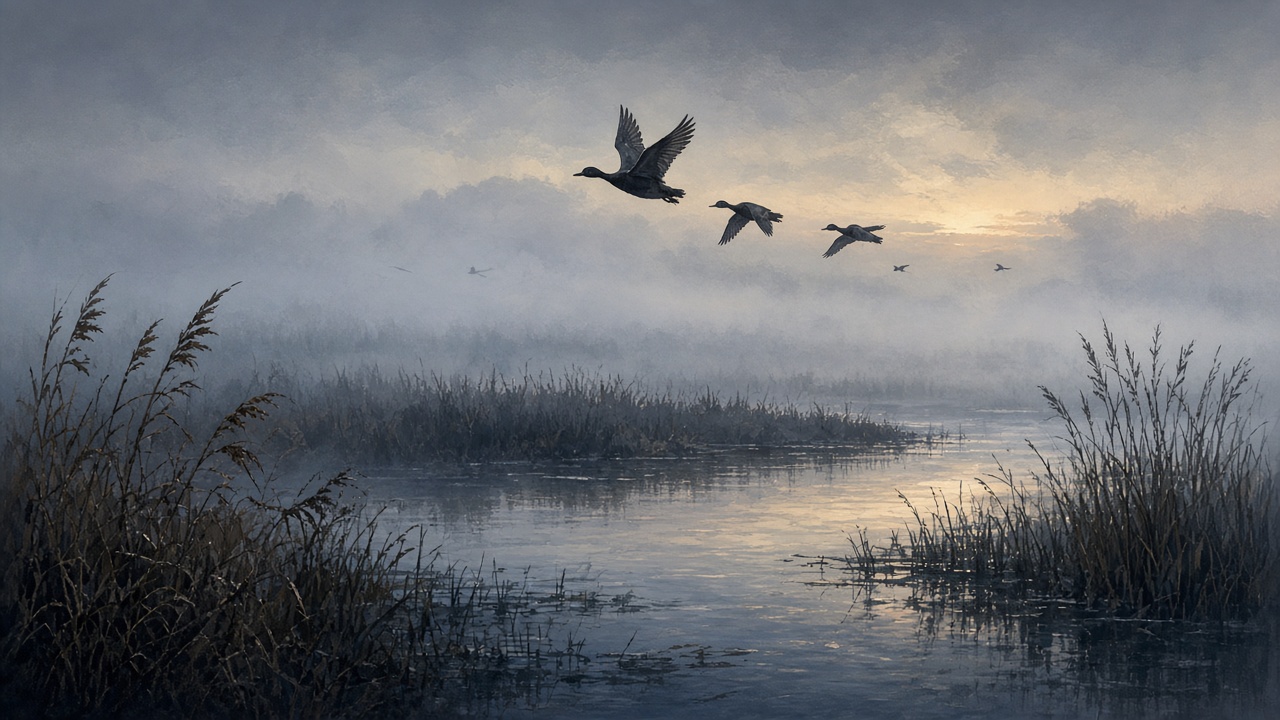
Wildfowl live by the water and the light. Ducks often spend the day resting on a quiet lake or out at sea, then move at nightfall to marshes, flooded grassland or mudflats to feed. Geese often do the opposite, roosting on water or a sandbank overnight and flighting out to the fields at dawn. The waterfowler waits along those routes or near the resting places: on foot on the saltmarsh, on an inland marsh or at the edge of a lake.
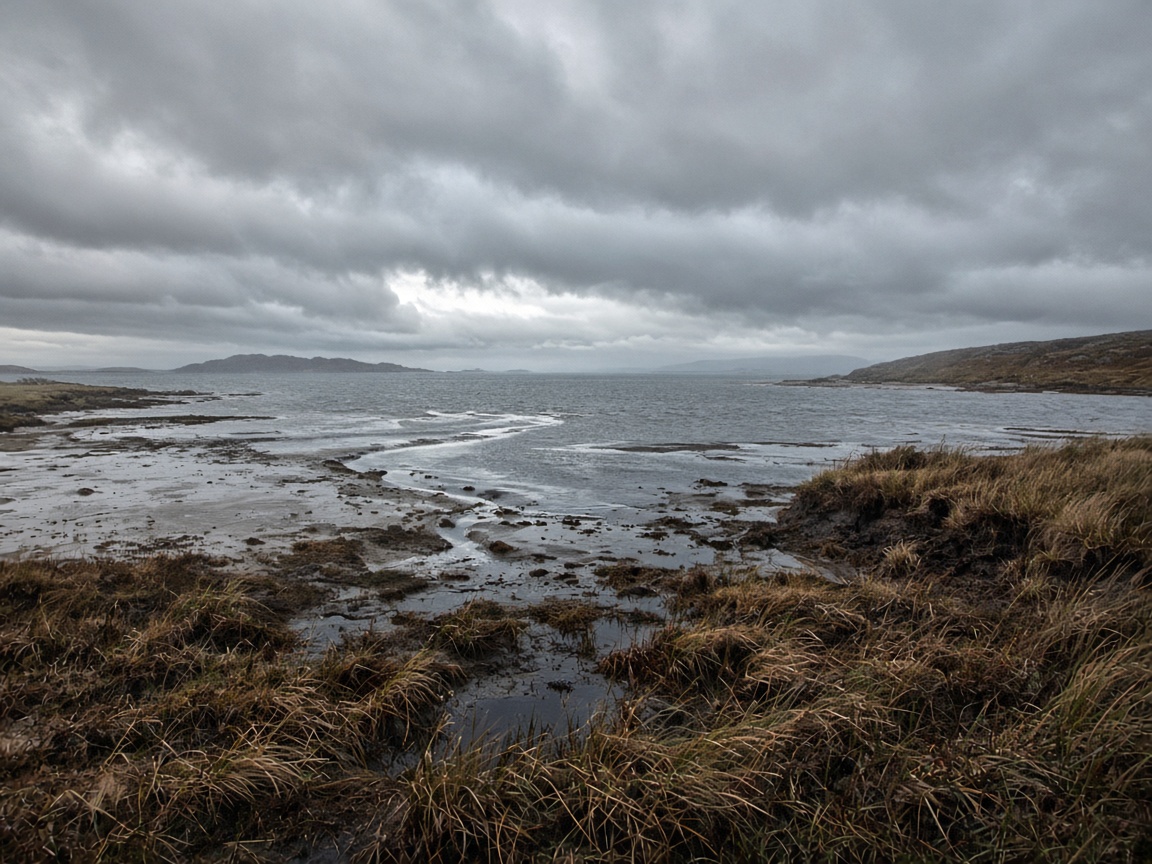
Each type of ground sets its own conditions. On the coast the tide rules everything: it moves the birds, floods the mud and can cut off your way back across the creeks. On inland marshes, water levels, vegetation and disturbance decide where birds settle. In the UK, much coastal shooting is organised by wildfowling clubs that manage their own stretches of foreshore.
Identifying the species is central. In flight and against the light, a quarry duck and a protected one can look alike: the ferruginous duck, for example, is easily confused with other diving ducks. Learn outlines, wingbeats and calls before the season, and hold your fire as long as there is any doubt. Picking up every bird that falls, usually with a dog, is part of the job.
How does waterfowl hunting work in the field?
What equipment do you need for waterfowl hunting?
- Chest waders or thigh boots, plus an auto-inflating lifejacket for deep or tidal ground
- Warm, waterproof clothing in muted colours, gloves and a hat
- Binoculars and an identification guide to ducks and geese in flight
- Non-lead cartridges suited to your gun, which the European Union requires in wetlands; the UK applies its own rules
Safety rules for waterfowl hunting
- Never go out on the foreshore without knowing the time of high water, the creeks, the soft mud and a safe way back, and avoid going alone
- Watch for signs of hypothermia, in yourself and in your dog, after a soaking or a long cold wait
- Do not shoot flat across the water: shot can ricochet off the surface
- After a fall or a soaking, open the gun and check that the barrels are not blocked by mud or water: a blocked barrel can burst when fired
Common mistakes in waterfowl hunting
- Shooting at birds that are too high or out of range, wounding them with little chance of recovery
- Going out with no dog and no way of retrieving birds that fall in the water
- Walking through resting areas in daylight and flushing the birds that use them
- Shooting in poor light without being sure of the species
Which species are hunted by waterfowl hunting?
Where is waterfowl hunting practised?
Canada
In Canada, migratory game bird hunting falls under federal regulations: non-toxic shot is compulsory (except for a few species such as woodcock), shotguns are limited to three cartridges, no shooting from a moving motor or sail boat, and hunters must have the means to retrieve birds.
Quebec (Canada)
Quebec applies the federal migratory bird regulations: non-toxic shot, shotguns holding no more than three cartridges, no shooting from a moving powered boat, and mandatory retrieval of birds.
Czechia
Mallard, pochard, tufted duck, coot and greylag, white-fronted and bean geese may be shot only with a shotgun at collective hunts with at least three guns and a set number of dogs. Lead shot is banned for waterfowl in wetlands.
England
In England, wildfowling means shooting ducks and geese on the foreshore and coastal marshes. The 1999 English lead shot regulations ban lead shot below the high-water mark of ordinary spring tides, over certain listed protected sites and, anywhere, for shooting ducks, geese, coot, moorhen, golden plover and snipe. A wider lead restriction adopted in 2026 for England, Wales and Scotland applies from 1 April 2029, subject to derogations.
France
In France, wildfowl are shot on lakes, marshes, rivers and the public foreshore (domaine public maritime), where shooting rights are often leased to local associations. Quarry species, seasons and methods are set nationally; the OFB and departmental hunting federations explain them.
Germany
Ducks, geese, sawbills, coot, mute swan and gulls are among the game birds listed in the German federal hunting act. It bans shooting game birds at night, from an hour and a half after sunset to an hour and a half before sunrise, with exceptions that include gulls and woodcock; several federal states add rules on cartridges and on the use of dogs near water.
Bavaria (Germany)
In Bavaria, lead shot is banned when hunting waterfowl at or over water.
North Rhine-Westphalia (Germany)
In North Rhine-Westphalia, hunting at or over water with lead shot is banned (LJG-NRW, section 19), and waterfowl hunting requires a hunting dog recognised as fit for work, known as brauchbar (section 30).
Hungary
Ducks and geese may be shot only in flight. From a boat, only hand propulsion is allowed, carrying one hunter with a dog plus the boatman.
Latvia
When hunting from a boat « uz celšanu » (flushing), only the hunter not propelling the boat may shoot; birds on the water may not be shot unless wounded.
Namibia
In Namibia, ducks and geese (Anatidae) are among the huntable game birds listed in Schedule 6 of the Nature Conservation Ordinance of 1975. Hunting them requires written authority from the landowner or the holder of the hunting right, during the seasons set by the Minister; the MEFT (Ministry of Environment, Forestry and Tourism) can confirm current seasons.
Portugal
Boats may be used only for ducks, coot and moorhen, and never while moving or with the engine running. Duck flighting near water may start one hour before sunrise and end one hour after sunset.
Romania
During hard frost, waterbirds may not be hunted near open water once over 70% of the water is frozen. Electronic callers are banned.
Scotland
On the Scottish foreshore, wildfowling is generally possible except in harbours, on military land and in some nature reserves, BASC explains; this right does not come from the access rights of the Land Reform (Scotland) Act 2003, which exclude hunting and shooting. Lead shot is banned for any shooting over wetlands (SSI 2004/289, regulation 4), and the general restriction adopted in 2026 also applies in Scotland from 1 April 2029, subject to derogations.
South Africa
In South Africa, waterfowl are shot on farm dams, rivers and wetlands, notably Egyptian geese and some ducks. Species, seasons and permits are set by provincial conservation authorities; the DFFE sets out the national framework and PHASA provides information on guided hunting.
Spain — Castilla y León
In Spain, waterfowl hunting (caza de acuáticas) takes place on marshes, deltas, lagoons and reservoirs, with a long tradition in areas such as the Ebro Delta or the Albufera of Valencia. Each autonomous community sets its own rules, and protected areas often have separate arrangements; the RFEC and regional federations point to the current regulations.
Sweden
Hunting ducks and geese requires a retrieving dog, with exceptions (snow, boat in open water, coast with decoys). From a motorboat, shots may be fired only once the engine has been off for at least one minute.
United States
The federal framework bans, for waterfowl, any shot other than approved non-toxic shot, shotguns holding more than three shells, sinkboxes, live decoys, recorded calls and shooting from a motorboat that has not come to rest. States then set their own seasons.
Rules vary by country and region: check with the local authority. See the sources
Waterfowl hunting compared with neighbouring techniques
Waterfowl hunting is the umbrella practice. Hide hunting is its static form, beside a managed pond and often at night where French rules provide for it. Flight shooting means intercepting birds as they move between resting and feeding areas at dawn or dusk. Decoys and calls are ways of drawing birds in, used in several of these methods and well beyond wetlands. Finally, the retriever is the almost indispensable companion at the water’s edge.
Regional forms of waterfowl hunting
- Waterfowl hide hunting Waterfowl hide hunting means waiting for ducks and geese in a permanent hide built beside a managed pond, with decoys set out on the water in front.
Key terms in waterfowl hunting
- wildfowl
- Ducks, geese and other quarry birds of wetlands and coasts.
- wildfowling
- Shooting ducks and geese on the foreshore and estuaries, usually at dawn and dusk.
- public foreshore (France)
- In France, the state-owned shore and intertidal zone, where shooting is organised separately, often by local associations.
- non-lead shot
- Lead alternatives such as steel, bismuth or tungsten; check your gun is proofed for them.
- retriever
- A dog trained to find and bring back shot game to hand, on land or from water.
- hide
- A concealed shelter by water; in France, a fixed hut beside a managed pond, used at night in some departments.
- flight
- The dawn or dusk movement of birds between roosting and feeding areas, and shooting them as they pass.
- decoy
- An artificial bird, or a live one where the law allows it, set out to draw birds in.
Frequently asked questions about waterfowl hunting
What is waterfowl hunting?
It is the shooting of ducks, geese, coot and other quarry birds of wetlands, on lakes, marshes and the coast, from a fixed spot, during the morning or evening flight, or from a hide.
Which waterfowl species can be shot?
It depends on the country and sometimes the region. In France the list includes mallard, teal, greylag goose and coot; in Spain each autonomous community publishes its own orden de vedas; in the UK, check the quarry list for your part of the country.
Is lead shot banned for waterfowl?
In the European Union, a 2021 regulation restricts lead shot in and around wetlands. In the UK, separate regulations for England and for Scotland already restrict lead over wetlands or for wildfowl, and a wider British restriction was adopted in 2026; BASC summarises them. In every case, check that your gun is suitable for non-lead shot.
How do you avoid shooting a protected species?
Learn outlines, flight and calls before the season, use binoculars and never shoot a bird you have not seen clearly. As the light fails, the slightest doubt means letting it pass.
Do you need a dog for waterfowl hunting?
A retriever is strongly advised: it finds birds that fall into reeds or drift away on the current, which you could not safely recover on your own.
Can you shoot on the beach or the foreshore?
In some countries, yes, in defined areas: the public foreshore in France, the foreshore in the UK, often through clubs. In Spain, the coast and many wetlands have their own rules. Check access and refuge areas with local associations, clubs or authorities.
Waterfowl hunting in pictures
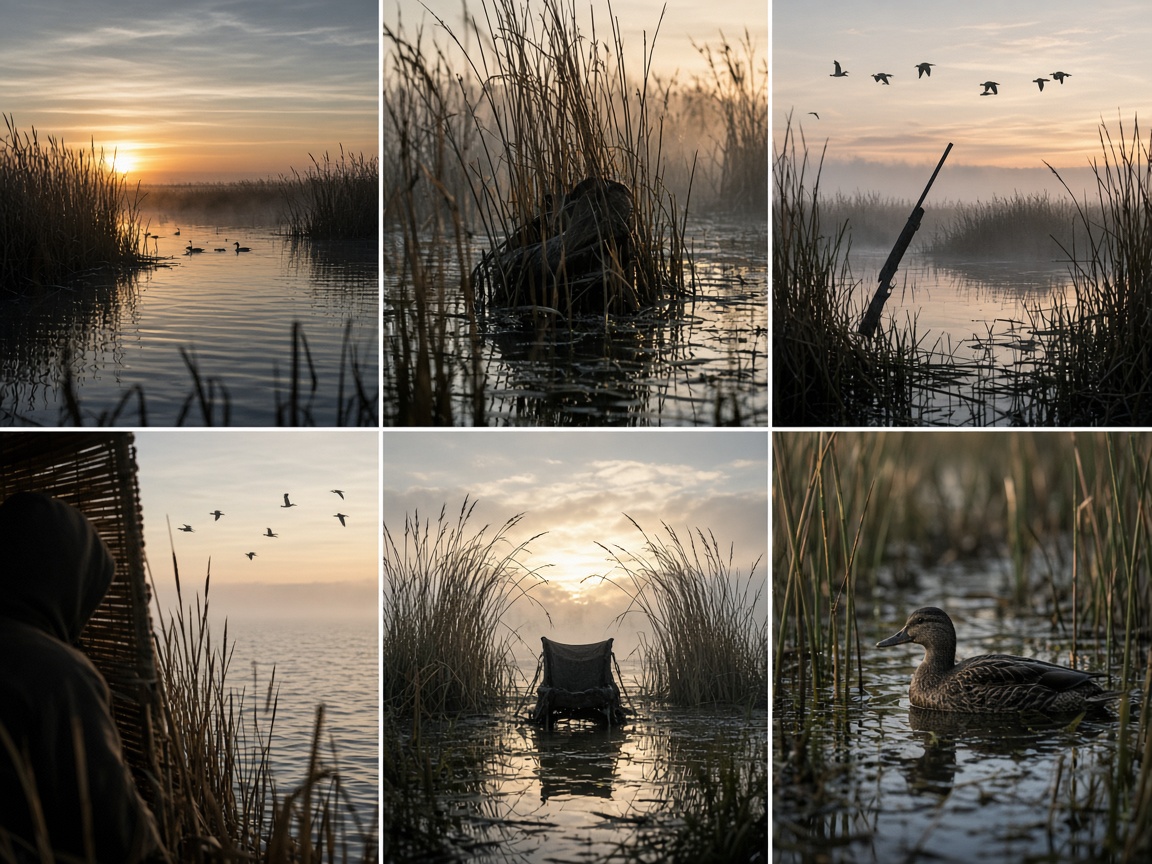
Sources and references on waterfowl hunting
- Office français de la biodiversité (OFB) — Chasse, permis de chasser et police de l’environnement (consulted on )
- Fédération nationale des chasseurs (FNC) — Chasseur de France : pratiques, sécurité et fédérations départementales (consulted on )
- Légifrance — Code de l’environnement, livre IV, titre II : chasse
- EUR-Lex — Règlement (UE) 2021/57 sur le plomb dans les munitions en zones humides (consulted on )
- EUR-Lex — Directive 2009/147/CE concernant la conservation des oiseaux sauvages (consulted on )
- BASC — Wildfowling (consulted on )
- BASC — Lead ammunition (consulted on )
- legislation.gov.uk — Environmental Protection (Restriction on Use of Lead Shot) (England) Regulations 1999, SI 1999/2170, regulation 3 and Schedule 2 (consulted on )
- legislation.gov.uk — Environmental Protection (Restriction on Use of Lead Shot) (Scotland) Regulations 2004, SSI 2004/289, regulations 3 and 4 (consulted on )
- legislation.gov.uk — REACH (Amendment) Regulations 2026, SI 2026/195 : restriction du plomb dans les munitions (consulted on )
- Wildfowl & Wetlands Trust (WWT) — Wetland birds and habitats (consulted on )
- Code of Good Shooting Practice — The Code of Good Shooting Practice (consulted on )
- Real Federación Española de Caza (RFEC) — Modalidades, licencias y federaciones autonómicas (consulted on )
- Boletín Oficial del Estado (BOE) — Legislación estatal y autonómica de caza (consulted on )
- Ministerio para la Transición Ecológica y el Reto Demográfico (MITECO) — Caza y biodiversidad (consulted on )
- Department of Forestry, Fisheries and the Environment (DFFE) — Biodiversity, hunting and permits in South Africa (consulted on )
- Professional Hunters’ Association of South Africa (PHASA) — Professional hunting in South Africa (consulted on )
- Justice Laws Website (Government of Canada) — Migratory Birds Regulations, 2022 (SOR/2022-105), sections 37, 38, 39, 41 and 42 (consulted on )
- e-Sbírka (Ministerstvo vnitra ČR) — Zákon č. 449/2001 Sb., o myslivosti, § 45 odst. 1 (znění platné k 4. 11. 2026) (consulted on )
- Bundesministerium der Justiz (gesetze-im-internet.de) — Bundesjagdgesetz (BJagdG), § 2 Tierarten (consulted on )
- Boletín Oficial del Estado (BOE) — Ley 4/2021, de 1 de julio, de Caza y de Gestión Sostenible de los Recursos Cinegéticos de Castilla y León (texto consolidado) : arts. 32-40, 50-51 y anexo III (modalidades) (consulted on )
- Légifrance — Code de l'environnement, article L424-6 : lieux de chasse du gibier d'eau (zone maritime, marais non asséchés, cours et plans d'eau) (consulted on )
- Nemzeti Jogszabálytár — 79/2004. (V. 4.) FVM rendelet (hatályos 2026.08.30.) : 22. §, 66. §, 68.–71. §, 73. § (consulted on )
- Likumi.lv — Medību noteikumi, points 3.1.1, 10¹, 11, 49, 51.6, 62, 68, 73, 77, 80, 81, 86 à 91, 95 à 99 (consulted on )
- Ministry of Environment, Forestry and Tourism (MEFT) — Nature Conservation Ordinance 4 of 1975 : définition de hunt, ss. 25, 32-33 et 38, annexe 6 (huntable game birds) (consulted on )
- Procuradoria-Geral Distrital de Lisboa — Decreto-Lei n.º 202/2004, de 18 de agosto (versão consolidada, DL 71/2024) : art. 84.º, 86.º, 88.º, 90.º (consulted on )
- Portal Legislativ (Ministerul Justiției) — Legea vânătorii și a protecției fondului cinegetic nr. 407/2006, forme actualisée : art. 24, 39, 42 et annexe 1 (consulted on )
- Sveriges riksdag — Jaktförordning (1987:905), 14 §, 14 a §, 17 §, 19 § et 20 § (consulted on )
- eCFR (U.S. Fish and Wildlife Service) — 50 CFR § 20.21 What hunting methods are illegal? (consulted on )
- Bayerische Staatskanzlei (gesetze-bayern.de) — Verordnung zur Ausführung des Bayerischen Jagdgesetzes (AVBayJG), § 11 Ausübung der Jagd auf Wasserfederwild an und über Gewässern (consulted on )
- Land Nordrhein-Westfalen (recht.nrw.de) — Landesjagdgesetz Nordrhein-Westfalen (LJG-NRW), version consolidée publiée sur recht.nrw.de (consulted on )
- legislation.gov.uk — Environmental Protection (Restriction on Use of Lead Shot) (England) Regulations 1999, SI 1999/2170, regulation 3 et Schedule 2 (consulted on )
- legislation.gov.uk — Land Reform (Scotland) Act 2003, section 9(c) : la chasse et le tir sont exclus des droits d'accès (consulted on )
Practice information — not a legal authorisation.