- Family
- Wetland shooting
- Difficulty
- Moderate: you need to know how each species behaves, set decoys well and stay completely hidden
- Organisation
- Alone or two in one hide
- Key gear
- Decoys suited to the species, calls, a portable hide or camouflage net
- Season
- Varies by species, its local status and the country: check with the federation or the relevant authority
- Who it suits
- Shooters who enjoy understanding game behaviour and building a position with care
What is the idea behind hunting with decoys and calls?
The idea is to reassure or to arouse curiosity. A bird that sees others feeding calmly concludes that the spot is safe and offers food: that is how shell and full-bodied decoys work. Crows also react to a bird of prey, such as an imitation eagle owl, which they come in to mob. A fox, for its part, comes to the squeal of an injured rabbit or hare.
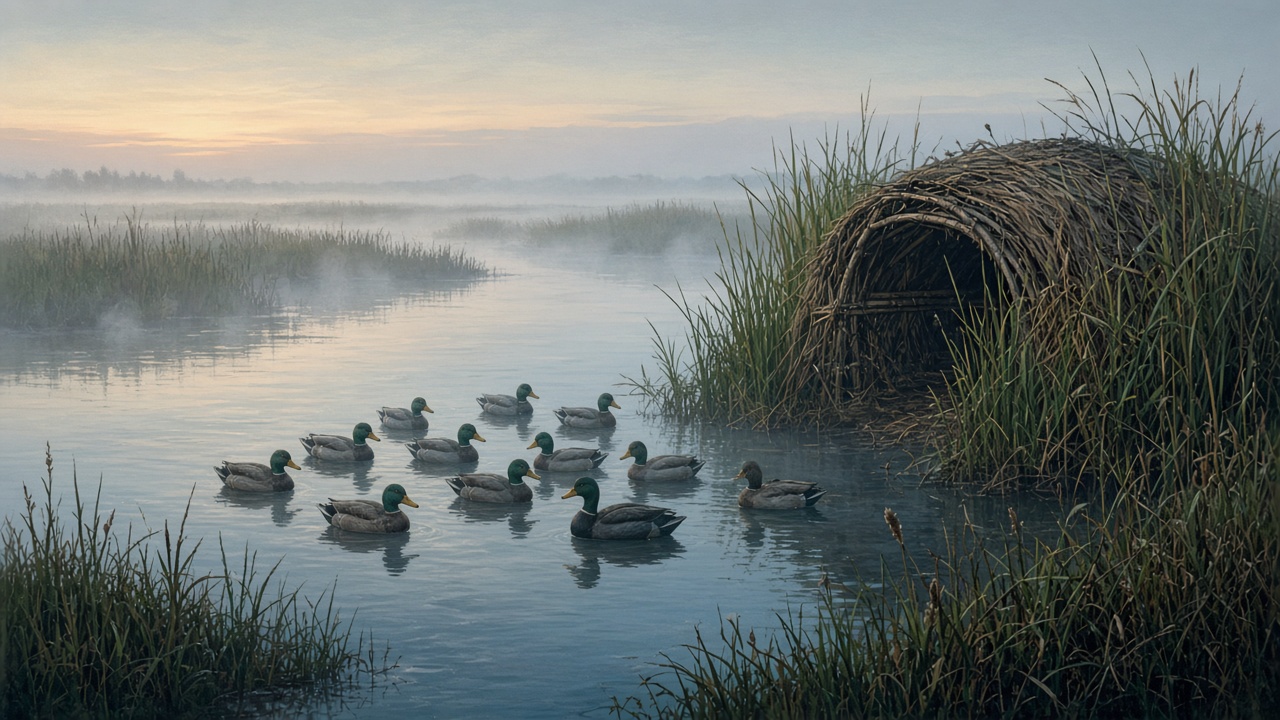
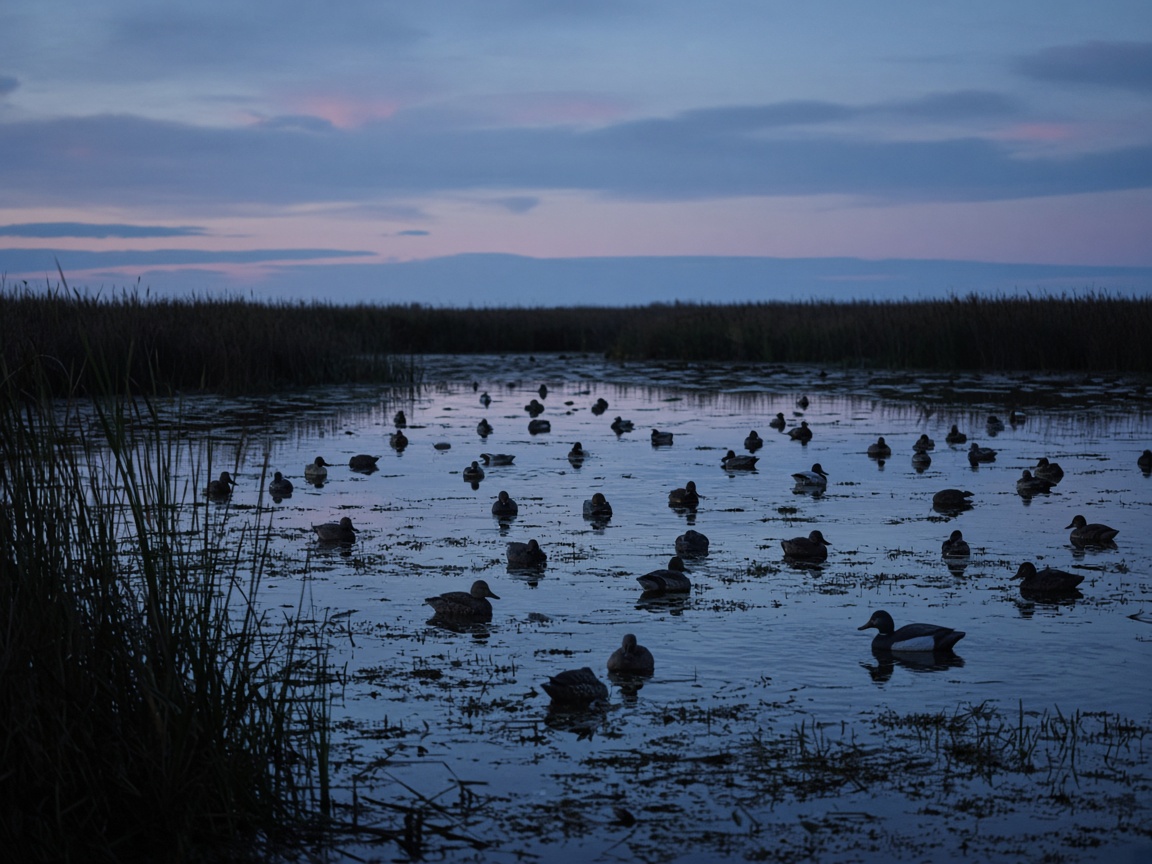
How decoys are set matters as much as how lifelike they are. For wood pigeon, the pattern goes on a field where birds are already feeding, heads into the wind, with a gap left for birds to land. For ducks, you recreate a group resting on the water. For fox calling, you call from a spot with a long view and the wind in your favour, because the fox tries to circle round to scent the sound.
What is permitted varies widely. Live decoys, electronic callers and recordings may be allowed, restricted or banned depending on the country, the species and sometimes the time of year, and the status of crows and foxes changes from one territory to another. Check each method before using it and, where live decoys are permitted, give them water, shelter and proper care.
How does hunting with decoys and calls work in the field?
What equipment do you need for hunting with decoys and calls?
- Decoys suited to the species and, where permitted, a few moving decoys
- Mouth calls for duck, crow and fox
- Camouflage netting, poles and a low seat for a portable hide
- Non-lead cartridges suited to your gun, which the European Union requires in wetlands; the UK applies its own rules
Safety rules for hunting with decoys and calls
- Know exactly where other hides, paths and houses are before shooting from a low position
- When calling foxes, never shoot towards a hedge or cover you cannot see beyond
- Know the tides, channels and soft mud before you go out
Common mistakes in hunting with decoys and calls
- Setting decoys in rows that are too regular or too tight, which look artificial
- Calling too loudly or too often and putting off wary birds
- Moving in the hide while birds are circling over the decoys
- Shooting in poor light without being sure of the species
Which species are hunted by hunting with decoys and calls?
Where is hunting with decoys and calls practised?
England
In England, pigeon decoying over crops is widespread, as is shooting crows over decoys. These birds are controlled under Natural England’s general licence GL42 (2026 version), which only allows action to prevent serious damage and requires other lawful methods to continue to be used.
France
In France, decoys (appelants) are used for waterfowl, wood pigeon and crows, and calls (appeaux) for fox. Live duck decoys are permitted within a defined framework, with possible restrictions during avian influenza outbreaks; the status of magpie and carrion crow varies by department. The OFB and the departmental federation explain which methods are permitted.
Germany
Lockjagd (calling game) imitates the call of the species or of its prey: the calls of females of hoofed game during the rut, the calls of ducks, geese and woodpigeons, or a distressed hare or rabbit to bring in a fox. Federal law bans sound recordings for all hunting, and blinded or maimed birds for hunting game birds; some federal states have set their own rules.
Bavaria (Germany)
In Bavaria, the state hunting act, which replaces the federal rule on this point, bans electronic sound devices for hunting. It allows them for furred predators not protected under Annexes IV and V of the EU Habitats Directive and for invasive alien species.
North Rhine-Westphalia (Germany)
In North Rhine-Westphalia, pigeon or crow carousels may be used to attract game only when fitted with dummy birds.
Scotland
In Scotland, pigeon decoying and crow shooting fall under NatureScot’s general licences: GL02/2026 covers wood pigeon, carrion and hooded crow, rook, jackdaw and magpie, among others, to prevent serious damage to crops and livestock. Its listed methods include shooting and Larsen-type cage traps.
Spain — Castilla-La Mancha
In Spain, the word reclamo covers both a call and a live decoy bird. Hunting red-legged partridge over a caged cock bird whose song draws in wild males is a tradition regulated by some autonomous communities. Decoys are also used for wood pigeon and ducks. Each community sets the permitted methods.
Rules vary by country and region: check with the local authority. See the sources
Hunting with decoys and calls compared with neighbouring techniques
Decoys and calls are a means rather than a stand-alone technique: they are central to hide hunting, where they bring ducks onto the pond, and to the palombière, where they pull in flocks of wood pigeon. Hunting with decoys and calls differs from plain stand hunting, where you wait without drawing game in, and from waterfowl hunting in general, since it extends to pigeons, crows and foxes.
Key terms in hunting with decoys and calls
- decoy
- An artificial bird, or a live one where the law allows it, set out to draw birds in.
- call
- A device that imitates an animal’s cry to bring it closer.
- general licence
- In the UK, a licence published by the nature agency that allows certain bird species to be controlled, under stated conditions, without an individual application.
- partridge reclamo
- A Spanish tradition in which a caged red-legged partridge cock draws wild birds to a hidden position with its call, where the rules allow it.
- palombière
- A hide in south-west France, often raised among trees, used to draw migrating wood pigeons with decoys.
- hide
- A concealed shelter by water; in France, a fixed hut beside a managed pond, used at night in some departments.
Frequently asked questions about hunting with decoys and calls
What is hunting with decoys and calls?
It means drawing game to a hidden position with decoys that look like its own kind and calls that copy its voice or that of prey, then shooting identified birds or animals that come in.
What is the difference between a decoy and a call?
A decoy works by sight: an imitation bird, or a live one where permitted. A call works by sound: it imitates the species or a prey animal. The two are often used together.
Are electronic callers allowed?
It depends on the country and the species. They are restricted or banned in many settings and allowed in others under conditions. Check the current rules before using one.
How do you set out a pigeon decoy pattern?
On a field where pigeons are already feeding, heads into the wind, in loose groups, with a clear landing area in front of the hide. A few raised or moving decoys, where permitted, make the pattern more visible.
How do you call in a fox?
With a call that imitates a rabbit or hare in distress, from a position overlooking open ground, wind in your favour. A fox will often circle downwind of the sound to scent it, so watch that side.
Can you use live decoys?
Only where the rules allow. In France, live duck decoys are permitted within a defined framework; in Spain, the partridge reclamo is regulated by the autonomous communities. In every case the bird needs water, food, shelter and care.
Hunting with decoys and calls in pictures
Sources and references on hunting with decoys and calls
- Office français de la biodiversité (OFB) — Chasse, permis de chasser et police de l’environnement (consulted on )
- Fédération nationale des chasseurs (FNC) — Chasseur de France : pratiques, sécurité et fédérations départementales (consulted on )
- Légifrance — Code de l’environnement, livre IV, titre II : chasse
- Ministère de la Transition écologique — Politique de la chasse (consulted on )
- EUR-Lex — Directive 2009/147/CE concernant la conservation des oiseaux sauvages (consulted on )
- EUR-Lex — Règlement (UE) 2021/57 sur le plomb dans les munitions en zones humides (consulted on )
- Natural England (GOV.UK) — Wildlife licences and protected species in England (consulted on )
- Scottish Government — Wildlife management and game in Scotland (consulted on )
- DAERA Northern Ireland — Wildlife and game in Northern Ireland (consulted on )
- British Association for Shooting and Conservation (BASC) — Shooting advice and codes of practice (consulted on )
- Game & Wildlife Conservation Trust (GWCT) — Game and wildlife research (consulted on )
- Real Federación Española de Caza (RFEC) — Modalidades, licencias y federaciones autonómicas (consulted on )
- Boletín Oficial del Estado (BOE) — Legislación estatal y autonómica de caza (consulted on )
- Bundesministerium der Justiz (gesetze-im-internet.de) — Bundesjagdgesetz (BJagdG), § 19 Sachliche Verbote (consulted on )
- Diario Oficial de Castilla-La Mancha (DOCM) — Orden 83/2026, de 9 de junio, por la que se fijan los períodos hábiles de caza y las vedas en Castilla-La Mancha para la temporada 2026-2027 (perdiz con reclamo macho, cimbeles) (consulted on )
- Légifrance — Arrêté du 4 novembre 2003 relatif à l'usage des appeaux et des appelants pour la chasse des oiseaux de passage, du gibier d'eau et de certains corvidés (consulted on )
- Bayerische Staatskanzlei (gesetze-bayern.de) — Bayerisches Jagdgesetz (BayJG), Art. 29 Sachliche Gebote und Verbote (abweichend von den §§ 19 und 19a BJagdG) (consulted on )
- Land Nordrhein-Westfalen (recht.nrw.de) — Landesjagdgesetz Nordrhein-Westfalen (LJG-NRW), version consolidée publiée sur recht.nrw.de (consulted on )
- Natural England (GOV.UK) — GL42: general licence to kill or take certain species of wild birds to prevent serious damage (2026) (consulted on )
- NatureScot — Statement of reasons for General Licences 2026 (GL01, GL02, GL03) (consulted on )
Practice information — not a legal authorisation.