Landscapes, damage and land use
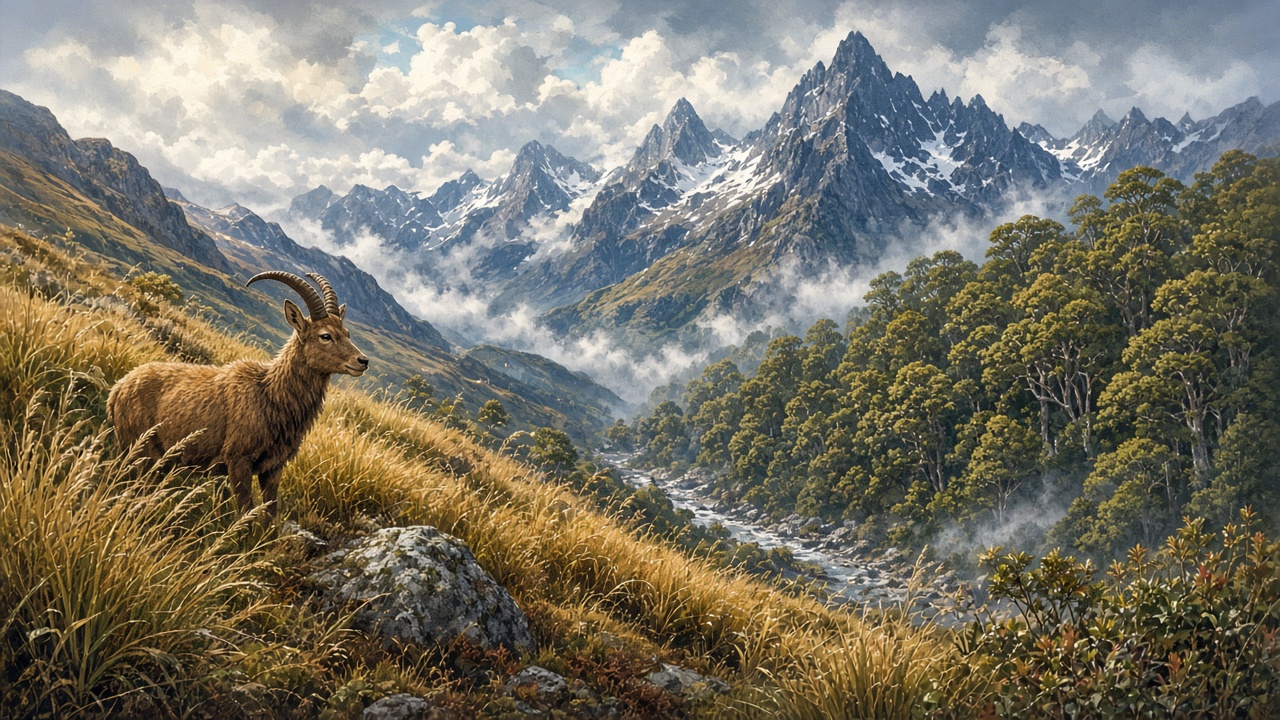
Rising deer numbers weigh on the regeneration of native woodland and new plantations. Several public reports have recommended stronger national deer management.
Wildlife health
Bovine tuberculosis is monitored in deer in some areas, notably Wicklow. Avian influenza can lead to measures concerning waterfowl.
Who decides what
The Wildlife Act 1976 governs hunting; NPWS issues licences and publishes open periods by order (Open Seasons Order). Hunting requires landowner permission, often through local gun clubs.
Deer pressure that is measured, not counted
Ireland has no official national deer census: even in County Wicklow, where the population is estimated at around 100,000 animals, the figure is only an estimate (RTÉ, 2024). The most solid indicator is therefore the number of animals shot. According to the Irish Deer Commission, quoted by Agriland, 65,547 red deer hybrids, sika and fallow deer were culled in 2023/24, about 20% more than in 2022/23, including 18,936 in Wicklow alone. For the twelve months to 28 February 2023, NPWS data given to the Irish Deer Commission showed a record 78,175 animals, against 55,008 in 2022 (RTÉ); the two series cover different periods and compilers and should not be compared line by line. Seven counties (Wicklow, Cork, Waterford, Tipperary, Kerry, Galway, Clare) account for 71% of that cull.
A local example: Killarney
In Killarney National Park, about 10,000 hectares, NPWS rangers culled almost 400 deer in 2025: 276 sika, an introduced species, and 116 native red deer (Irish Times, 29 December 2025). The NPWS points out that deer do not stop at park boundaries and that it does not “own” the population; local councillors report road collisions and crop damage. Nationally, the Irish Times puts the number of deer culled under licence each year at around 70,000.
What the figures mean for hunters
Much of the cull is carried out by hunters holding an annual NPWS licence: 6,486 deer hunting licences in 2023/24, plus 1,414 Section 42 licences under the Wildlife Acts. The same Deer Alliance figures show 12,628 animals taken outside the open season (May to July) or at night with lamps, which illustrates how much current management relies on derogations. Since the 2021/22 season, every first-time applicant must be certified by the NPWS: roughly 30 hours of self-study, a one-day course, a 50-question multiple-choice exam (80% to pass) and a range test of 12 shots from three positions (NPWS, mandatory certification). About 1,000 of the roughly 5,500 annual licences at the time went to newcomers.
Key figures
On 9 October 2025 the NPWS published its deer-culling data on data.gov.ie, and the dataset for the 2024/25 season (1 May 2024 to 30 April 2025) was released on 25 March 2026 (opendata.housing.gov.ie). Open-season dates were changed in 2024 and may change again, so they are deliberately not repeated here: check the NPWS.