Aunerys
Hunting Fishing · soon
FR EN ES
Species · 2 min read

Wild boar in Poland: hunting, ASF and voivodeships

Wild boar in Poland have been deeply affected by African swine fever since 2014. How hunting is organised (PZŁ, clubs, districts), the ASF timeline, reduction measures and two voivodeships as examples.

Byline: Jakub Nowak Published Updated
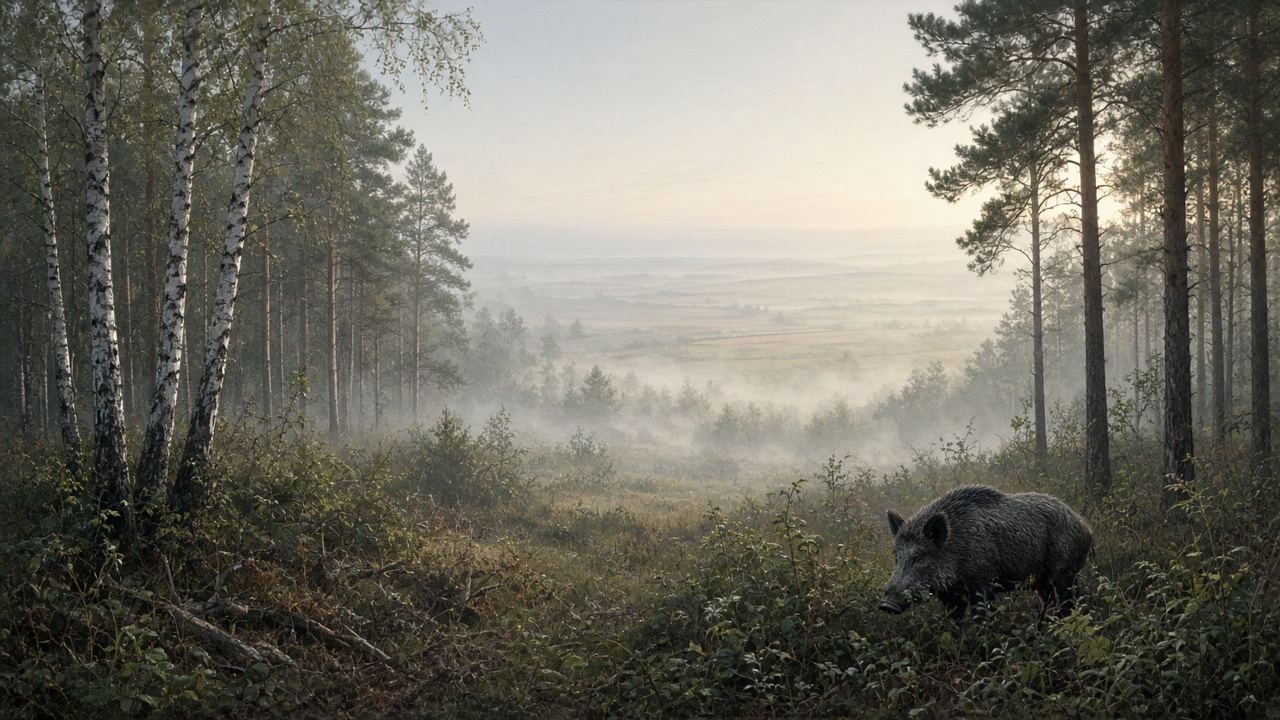
Pine and birch forest edge in morning fog, Poland — AI-generated illustration AI-generated illustration for Aunerys
Short answer

In Poland, hunting is organised by the Polish Hunting Association (PZŁ), its clubs and hunting districts. Since 2014, wild boar management has been dominated by the fight against African swine fever. Facts compiled on 4 November 2026.

Written by Jakub Nowak Facts compiled on 4 November 2026 Updated

Introduction

In Poland, wild boar are at once major game, a crop pest and the main wild reservoir of African swine fever. Since 2014, their management has been dominated by the fight against the disease.

How hunting is organised

The Hunting Law of 13 October 1995 (Prawo łowieckie) makes game the property of the state. Land is divided into hunting districts (obwody łowieckie), leased to hunting clubs (koła łowieckie) or managed directly by the State Forests (Lasy Państwowe). Every hunter must belong to the Polish Hunting Association (Polski Związek Łowiecki, PZŁ), after an apprenticeship and an exam. Each district follows an annual hunting plan approved by the forest administration.

African swine fever: timeline

The first ASF case in a wild boar in Poland was detected in February 2014 in Podlaskie voivodeship, near the Belarusian border. The disease spread west over several years, then jumped to Lubuskie voivodeship, near the German border, in November 2019. The General Veterinary Inspectorate (GIW) publishes restriction zones and applicable measures.

Measures for hunters

In affected areas, authorities imposed a sharp reduction in wild boar numbers, active carcass searches and biosecurity rules: sampling for testing, controlled transport and storage of carcasses, cleaning of equipment. These measures greatly reduced populations in the east of the country.

Two voivodeships

Podlaskie, in the north-east, combines mixed forests — including the Białowieża Forest, also home to European bison — and farmland on poor soils: it is where the epidemic began. Lubuskie, in the west, is one of the most forested regions of the country, with large pine forests on sandy soils; ASF arrived there in 2019, shortly before the first German cases.

Crop damage

In Poland, wild boar damage to crops is compensated by the manager of the hunting district. This rule creates a direct incentive to keep numbers under control and is at the heart of discussions between farmers and hunting clubs.
Destination Poland — hunting and nature →

Conclusion

In Poland, wild boar hunting depends on the hunting district and club, the approved annual plan and, above all, the ASF restriction zone in force. The General Veterinary Inspectorate’s maps are the first reference.
Sources : ISAP — Ustawa z dnia 13 października 1995 r. Prawo łowieckie; Polski Związek Łowiecki (PZŁ); Główny Inspektorat Weterynarii — ASF; Lasy Państwowe (forêts domaniales)
The author Jakub Nowak Articles on wild boar, deer and wildlife health in Poland. Editorial byline of the Aunerys desk. It does not attest to a verified local expertise. View profile →

Read next

Misty British woodland clearing with a red deer — AI-generated illustration AI-generated illustration for Aunerys
Species · 3 min

Deer management in the United Kingdom: six species, four frameworks

Natural landscape in Finland — AI-generated illustration AI-generated illustration for Aunerys
Species · 2 min

Moose, white-tailed deer and capercaillie: game species of Finland

Natural landscape in Bulgaria — AI-generated illustration AI-generated illustration for Aunerys
Species · 2 min

Red deer, Balkan chamois and common pheasant: game species of Bulgaria