Conservation issues
The wolf has returned naturally to Flanders (2018) and Wallonia, and is strictly protected. Brown hare and grey partridge have declined sharply with agricultural intensification.
Key species
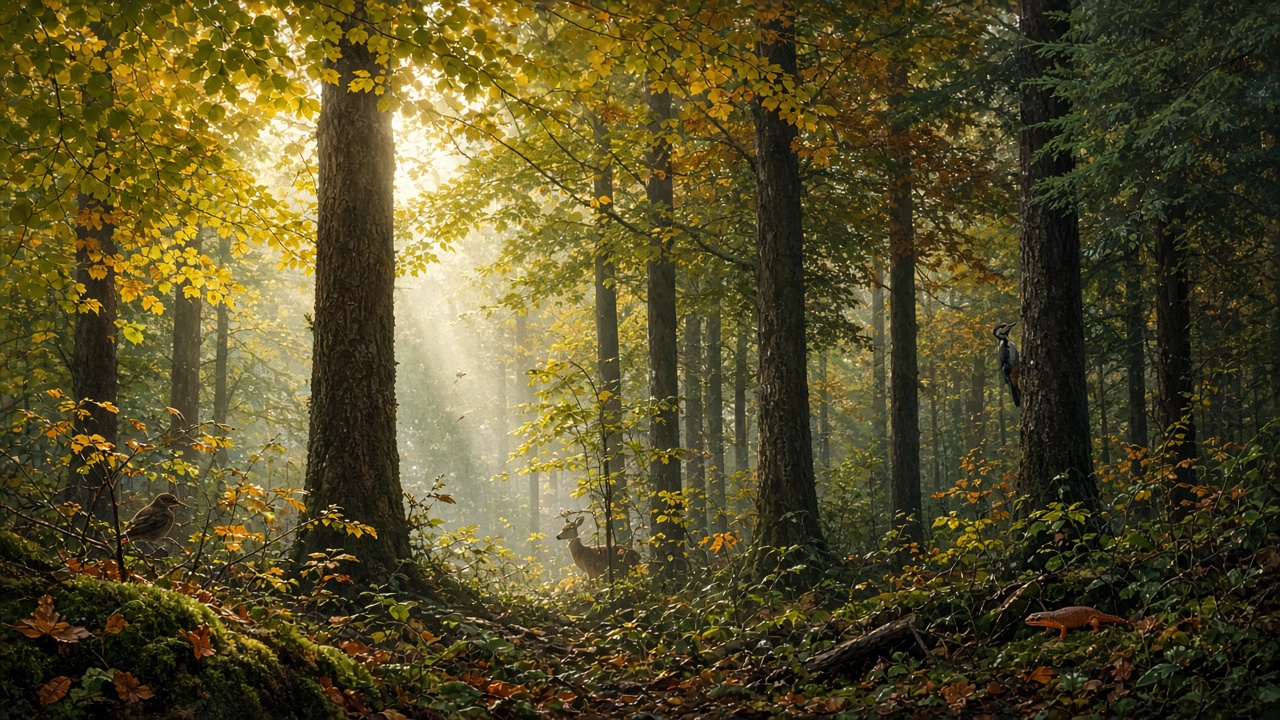
- Red deer (Cervus elaphus)
- Wild boar (Sus scrofa)
- Roe deer (Capreolus capreolus)
Landscapes, damage and land use
Feeding big game in Wallonia has been strongly restricted to limit densities and forest damage. Coexistence with walkers remains an issue in the Ardennes forest.
African swine fever: 2018–2020 in Wallonia
African swine fever was confirmed on 13 September 2018 in wild boar found near Buzenol, in the province of Luxembourg, about 12 km from France. From September 2018 to August 2020, 1,151 carcasses were found in the infected zone, 801 of them positive, with more than 5,500 tests run. The infected zone covered about 572 km² and the white zone about 534 km²; more than 5,000 domestic pigs were culled in the initial zone. EU restrictions were lifted in November 2020 and the World Organisation for Animal Health (WOAH) free status was recovered in December 2020 (University of Liège presentation to WOAH, June 2023).
Red deer and wild boar: rising densities
The Walloon government says red deer and wild boar populations are rising, which it links to climate and conditions favouring reproduction, with excessive pressure on forest ecosystems (Brussels Times, December 2024). According to Wallonia’s biodiversity portal, the region had 18,000 to 19,000 red deer in 2022, 25% more than in 2019. For wild boar, Walloon hunting minister Willy Borsus announced in October 2023 that 91,915 animals had been shot since 2019 under shooting plans (Brussels Times, October 2023). These figures are reported by the Belgian press.
The measures point the same way: night shooting of wild boar on plains under strict conditions, traps in areas that are hard to hunt, and extra drives at the end of the season if targets are not met. The feeding ban is phased in: 21 December 2023 to 20 February 2024, then 1 November to 31 March for two seasons, then 1 October to 31 March from 2026-2027. The hunting season was extended to 20 February in 2023-2024, then to 31 January in 2024-2025. The Act of 28 February 1882 allows wild boar feeding only as a deterrent to protect crops (art. 12 ter, § 4; Wallex).