How hunting is organised
The Hunting Law of 13 October 1995 (Prawo łowieckie) makes game the property of the state. Land is divided into hunting districts (obwody łowieckie), leased to hunting clubs (koła łowieckie) or managed directly by the State Forests (Lasy Państwowe). Every hunter must belong to the Polish Hunting Association (Polski Związek Łowiecki, PZŁ), after an apprenticeship and an exam. Each district follows an annual hunting plan approved by the forest administration.
African swine fever: timeline
The first ASF case in a wild boar in Poland was detected in February 2014 in Podlaskie voivodeship, near the Belarusian border. The disease spread west over several years, then jumped to Lubuskie voivodeship, near the German border, in November 2019. The General Veterinary Inspectorate (GIW) publishes restriction zones and applicable measures.
Measures for hunters
In affected areas, authorities imposed a sharp reduction in wild boar numbers, active carcass searches and biosecurity rules: sampling for testing, controlled transport and storage of carcasses, cleaning of equipment. These measures greatly reduced populations in the east of the country.
Two voivodeships
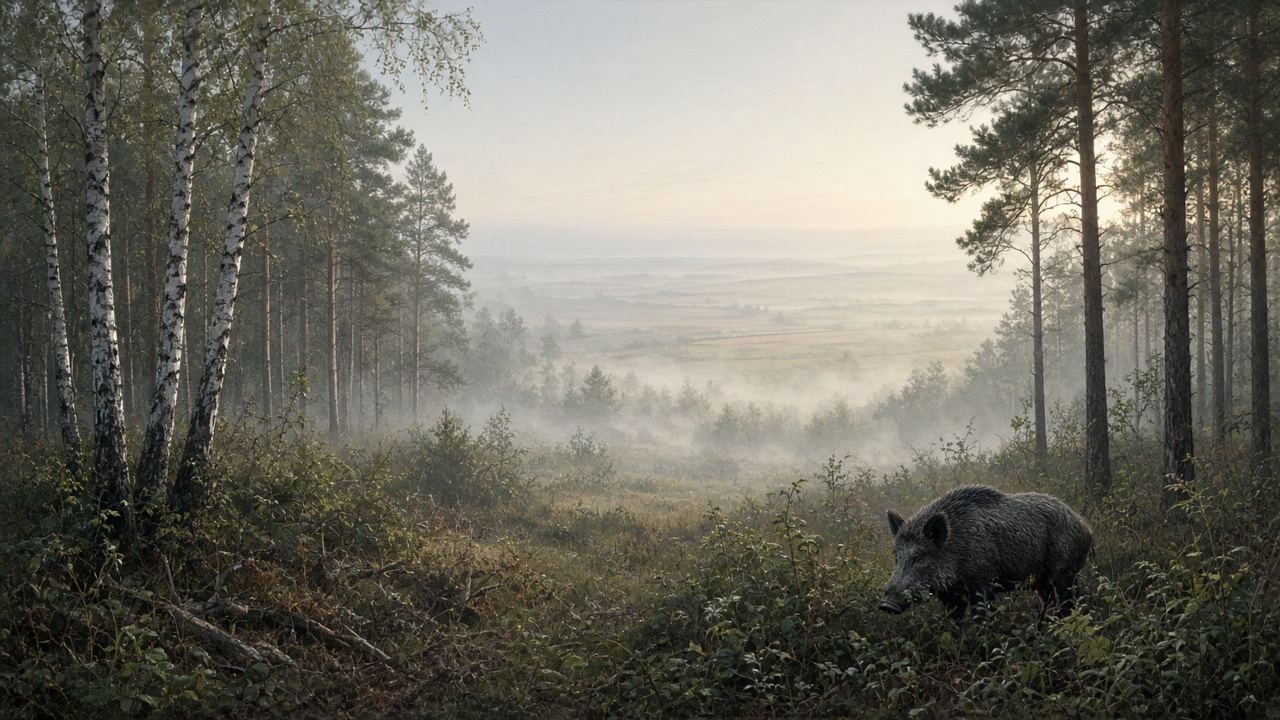
Podlaskie, in the north-east, combines mixed forests — including the Białowieża Forest, also home to European bison — and farmland on poor soils: it is where the epidemic began. Lubuskie, in the west, is one of the most forested regions of the country, with large pine forests on sandy soils; ASF arrived there in 2019, shortly before the first German cases.
Crop damage
In Poland, wild boar damage to crops is compensated by the manager of the hunting district. This rule creates a direct incentive to keep numbers under control and is at the heart of discussions between farmers and hunting clubs.