Hunting landscapes
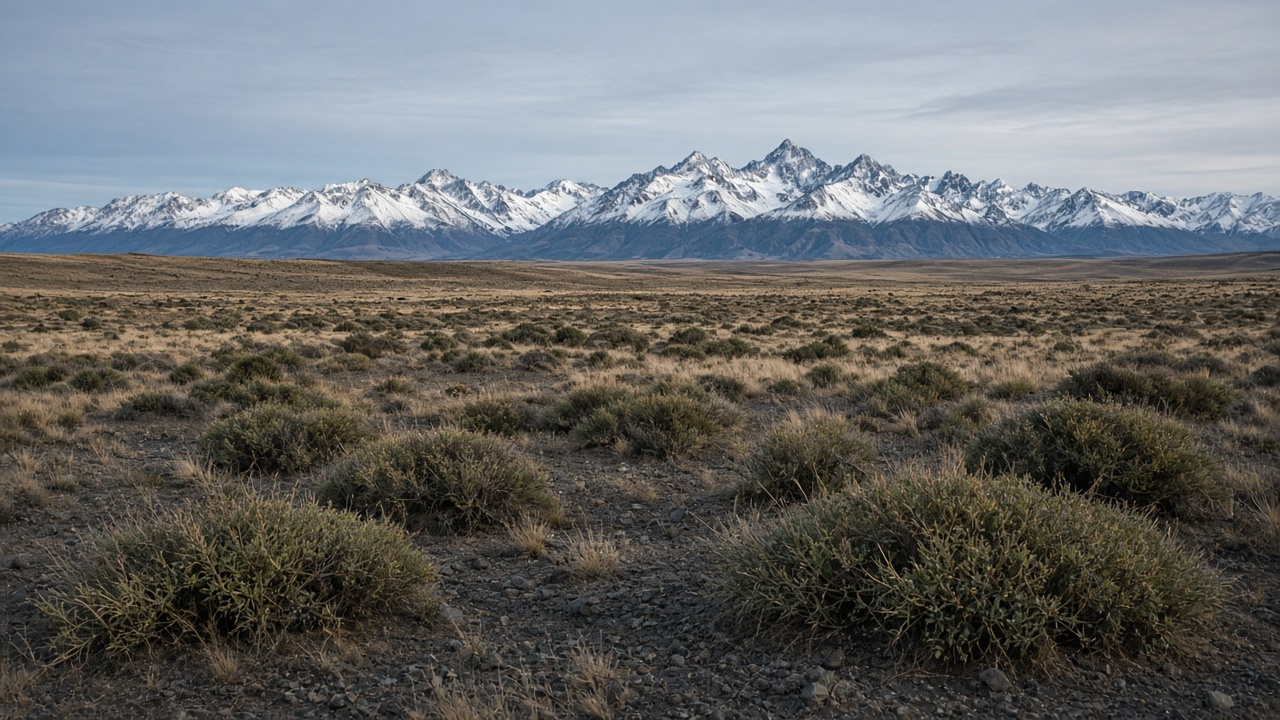
Chile stretches over 4,000 km between the Atacama Desert, the farmed central valleys, the temperate southern forests and Patagonia. The Andes form a continuous barrier to the east.
Key species
- Wild boar (Sus scrofa)
- European hare (Lepus europaeus)
- California quail (Callipepla californica)
Main hunting methods
- hunting over pointing dogs (caza con perro de muestra)
- pest species control (control de especies dañinas)
Wildlife health
SAG controls the entry of animal products, trophies included. Current health alerts are read on its site; none is frozen in this article.
Four hunting zones, one national regime
Hunting in Chile falls under a national statute, Ley 19.473 of 1996, enforced by the SAG across the whole country. For seasons and bag limits, the implementing regulation (Decree 5 of 9 January 1998) divides the country into four zones: North (regions I, II and III), Centre (IV, V, Metropolitan, VI and VII), South (VIII, IX and X) and Austral (XI and XII). This numbering comes from article 3 in the unofficial copy published by the SAG, which includes the 2004 amendment; it predates the creation of newer regions, so check a SAG map before booking a trip.
Where you may hunt: private land, cotos and protected areas
The SAG licence is not enough. Article 8 of the law also requires the express authorisation of the landowner, in line with article 609 of the Civil Code (hunting on your own land, or on someone else’s with permission). Article 7 of the law and article 10 of the regulation ban hunting in wilderness reserves, national parks, national reserves, natural monuments, nature sanctuaries, urban areas, along railways, at airports, on public roads (“on and from”) and in places of scientific interest. The SAG may grant exceptions, with the consent of the authority managing the area.
Then come the “prohibited hunting areas”. The SAG hunter’s guide (12th edition, November 2015) listed 22 of them, covering 2,639,221 ha between Atacama and Magallanes, with bans lasting 10 to 30 years; Santiago Andino (661,057 ha) and Entreríos (434,250 ha) are the largest it cites. These figures date from 2015: ask the SAG for the list currently in force. Cotos de caza, private estates set aside for hunting, require an environmental impact declaration or study (article 10 of the law), and their owner answers for damage to neighbouring land if there is no fence (article 21).
Safety distances
The regulation (article 25) and the SAG guide set two minimum distances. For small game, 400 m from a village or an isolated rural dwelling. For big game (animals whose adults normally weigh 40 kg or more, article 2 of the law; non-military firearms above 6 mm), 1,000 m from villages, dwellings, public roads, navigable waterways and railways. Inside a coto, the safety strips are 300 m along public roads and 400 m from dwellings for small game, and 1,000 m along roads and 500 m around the rest of the perimeter for big game (articles 32 and 37).
Pest species and banned methods
Article 6 of the regulation classes several species as “dañinas” (harmful): they may be hunted in any season, anywhere in the country, with no limit on numbers. The SAG list includes wild boar, rabbit, hare, introduced deer, beaver, mink and muskrat (SAG sheet, repeated by the press in April 2024). Some entries are local: goat and thrush (zorzal) only in the Juan Fernández archipelago, and the chilla fox only on Tierra del Fuego, where taking pelts off the island requires a transit permit from the SAG office in Porvenir.
The regulation does, however, ban night hunting (except pests), chasing game in vehicles, spotlights, fire, traps and baiting, and it also targets hunting rabbits and hares with firearms or compressed air by day between 1 September and 31 March in regions I to X and the Metropolitan Region (article 25). Small-game seasons are set by species and zone; the 2015 guide gave, for example, 1 June to 31 July for the Chilean tinamou (perdiz chilena) and 1 March to 31 August for the pheasant. Re-read article 5 of the regulation and the SAG page before you travel.
A field case: the American mink
In a note dated 26 June 2024, the SAG says the mink is established in five regions: Araucanía, Los Ríos, Los Lagos, Aysén and Magallanes. Its macrozonal control programme has run since 2020, and more than 2,600 mink have been captured in the Los Lagos region alone. A community programme of 812 million pesos was planned for 2025-2026; the SAG page talks about regulated trapping, not hunting. For a hunter this is a reminder: “no limit on numbers” does not mean “no local instructions”, and the regional SAG office remains the point of contact.